Everything You Need to Know for Your Canyoneering in Kawasan Falls (Our Firsthand Tips)
Don’t go canyoneering in Kawasan Falls without these tips based on our experience. Avoid mistakes and enjoy your adventure. Make the most of your trip.



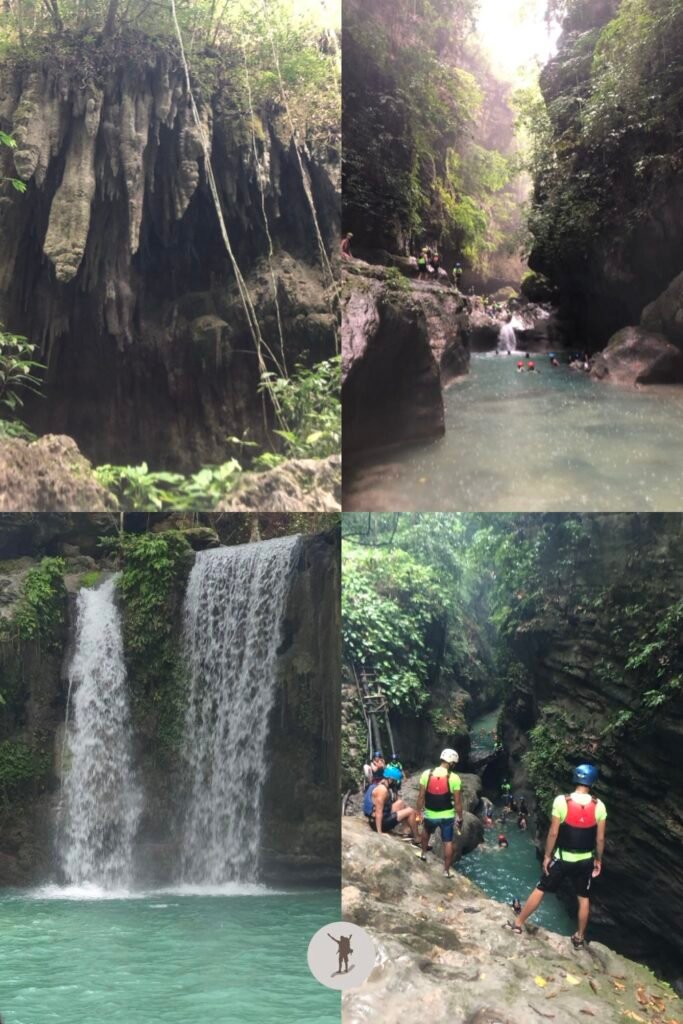

Whenever friends, family, or even casual acquaintances ask for Cebu travel tips, I always suggest canyoneering at Kawasan Falls. There are truly wonderful reasons for this. My reasons will help anyone who is on the fence feel ready to go canyoneering with you.
When I introduce this adventure to people, however, I try to do more than explain why it is worth doing. I also share my personal experience and practical tips so they understand what to expect and how to get ready for the journey.
This post is where I cover all the details you need for your trip.
Navigation:

Hi! It’s Eljon and I want to welcome you to my blog, Explore to Thrive.
Here, I share my experiences with traveling, reflections on spirituality, personal growth and insights on building an online business, all to make a difference.
But my mission goes beyond that. You can learn more about what I do by visiting my homepage or by subscribing to my newsletter.

Best Time to Visit
If there is one thing I always mention first when we talk about Kawasan Falls canyoneering, it is the best time to go.
It is the first thing I say because it is the biggest factor in your trip. Picking the right or wrong time and day for your adventure can change everything about your experience.
When it comes to this topic, most people say you should visit during the peak of the dry season from March to May because the weather is perfect. No rain means there is no chance of your trip getting canceled.
BUT I’d say it is a good idea to do a bit more research first before you decide and book your tickets.
Did you know we actually went to Cebu in November? That is during the rainy season which runs from June to early December and yet we did not have any big weather issues at all. And the best part? We had the canyoneering trails almost to ourselves for most of the time!
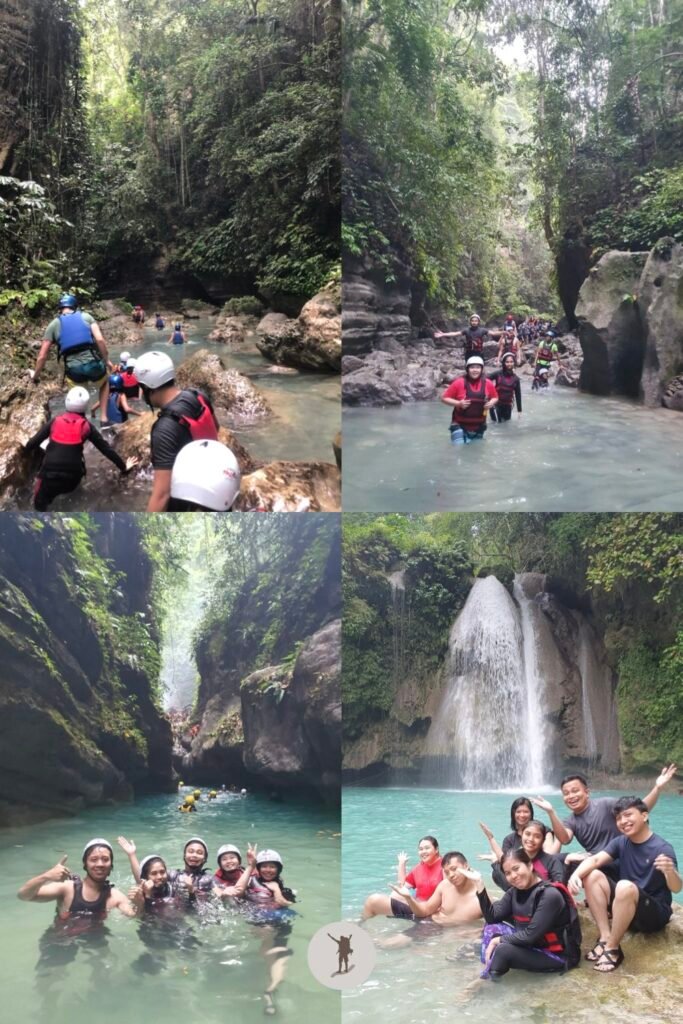
I’m not trying to tell you to travel during the rainy season, but I’d love for you to check out my blog post about the best time to go canyoneering at Kawasan Falls. This way, you can be prepared for your trip whether you visit in the dry months or the wet months.
Home Base
The rainy season is also the off-peak season. That means, less demand for everything related to tourism, including accommodation. It’s one of the things we factored when we’re deciding when to go. And by visiting during the off peak, we saved money, even if was not a significant “discount.”
We specifically stayed in one of the homestays in Barangay Basdiot, which became our home base for the entire time of our South Cebu trip (see our 4-day itinerary for more ideas and inspiration).
We picked Moalboal because it is close to all the top activities we wanted to do like Canyoneering in Kawasan Falls, the Sardine Run in Moalboal and Pescador Island, and swimming with whale sharks in Oslob.
Good to know: Before we landed on Moalboal, we actually looked at five different areas that would be perfect for a trip like this. You can see those options on our map of the best places to stay in South Cebu. I also included some notes there about why we chose one place over another to help you decide.
Itinerary
This is exactly how the day went after we walked out the door of our homestay, including a full timeline with timestamps for every part of the trip.
- 8:30 AM → We hopped into our private van and left our homestay.
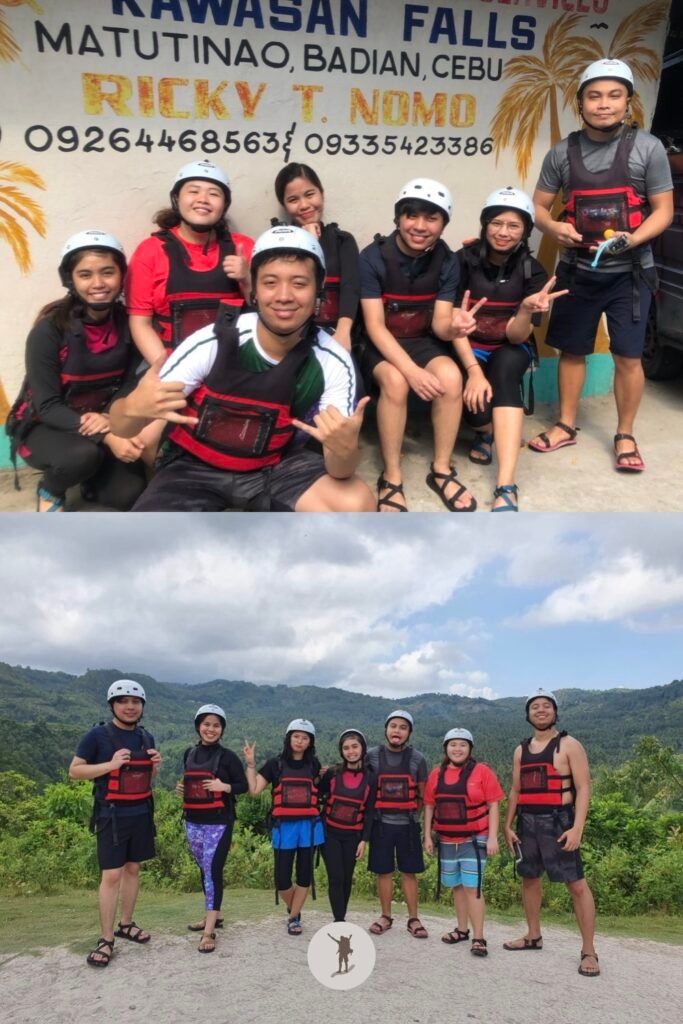
- 9:30 AM → We arrived at the canyoneering headquarters to grab our life jackets and helmets before taking a quick motorbike ride to the start of the trail.
- 10:00 AM → We reached the jump off point for a short briefing and then began the hike to the canyon entrance.
- 10:30 AM → The actual canyoneering adventure began.
- 2:30 PM → We made it to Kawasan Falls and ate a local lunch at the food stalls by the water.
- 3:30 PM → We reached the end of the trail.
Good to know: these timestamps come from the metadata in our trip photos. They are rounded to the nearest hour or half hour to help keep the schedule easy to follow.
From the timestamps, you can see that our adventure lasted about five or six hours.
We moved at this pace because we stayed together as a group and waited for everyone to be ready before moving to the next part. Some of us spent several minutes trying to convince our legs to actually move while staring down at the water from the cliffs. LOL, that definitely added some time.
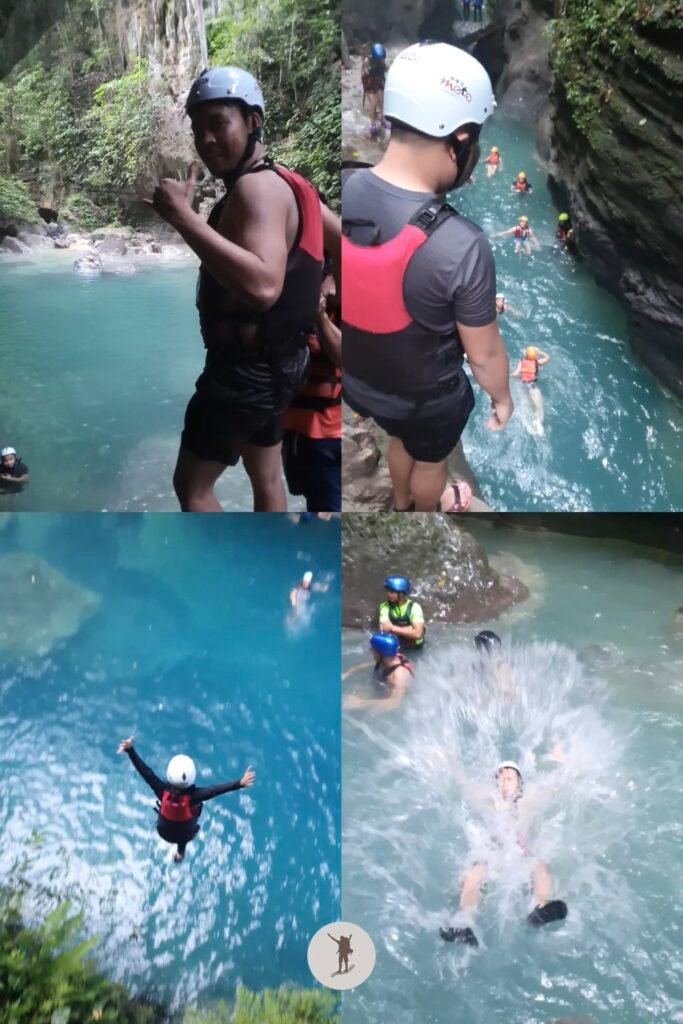
If you decide to go solo or with one partner, you can likely finish the whole route in around four hours.
Technical Details
When it is on full operation, the entire Kawasan canyoneering route covers about 5.5 kilometers of swimming, hiking, and climbing over rocks.
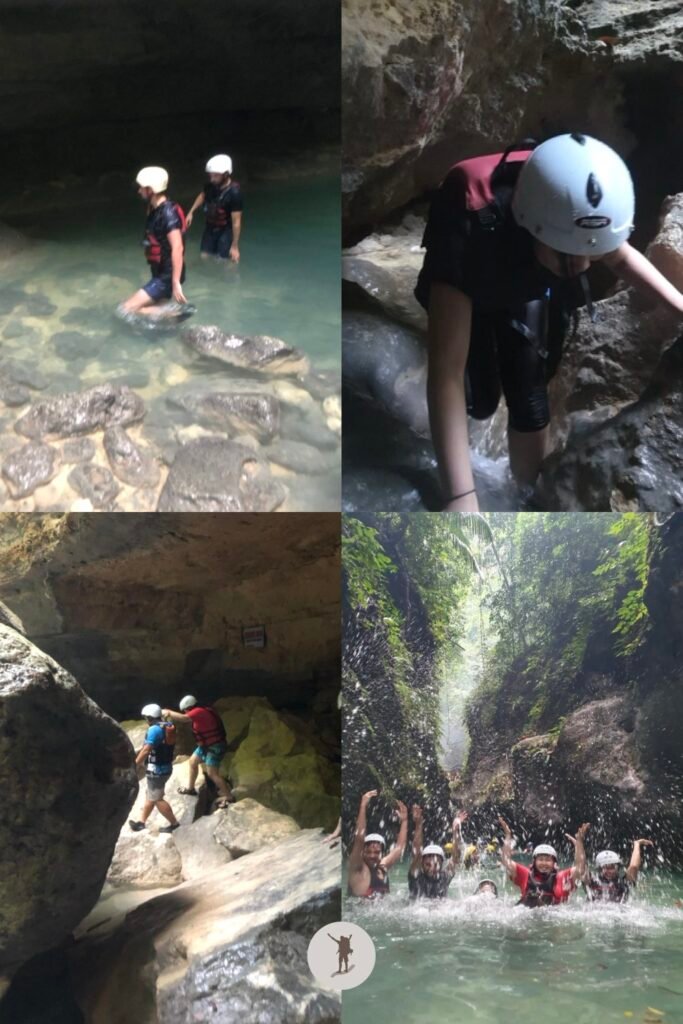
Our guide explained that there are actually two different paths you can take. The one we did is the most popular choice and the version that most tour companies offer to visitors.
Anyway, the route starts in the town of Alegria and follows the Kanlaob River downstream toward Badian where you find Kawasan Falls.
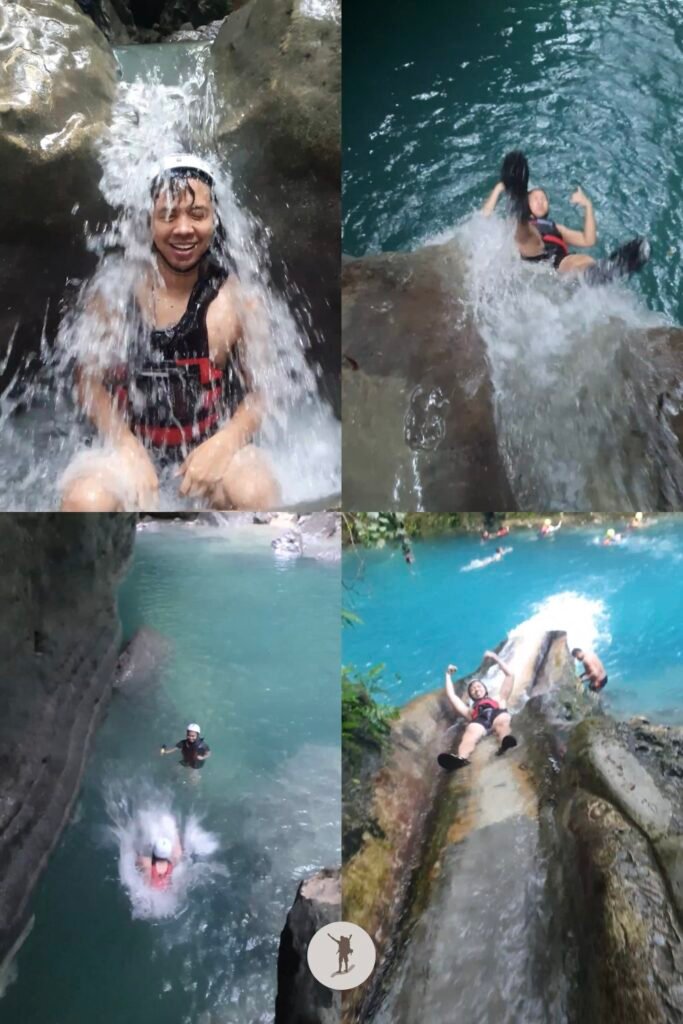
The course is broken into different parts. Some people call these stages, while others refer to them as ‘jumps.’ Regardless, there are seven different parts and each one feature its own main challenge. These challenges are usually either cliff jumps or natural water slides. Get ready to leap from the cliffs, which range in height from 4 to 10 meters!
Safety
The course is beginner friendly according to most people who take it. We agree with that sentiment after our own experience.
It is important that you can comfortably paddle or doggy paddle to get yourself from point A to point B. However, there is no need to worry about drowning because you will be wearing a life vest the whole time.
Actually, a friend asked to remove her life vest since she can float and swim. Our guide refused because wearing one constantly is a strict safety rule. You must wear both the life vest and your helmet all the time.
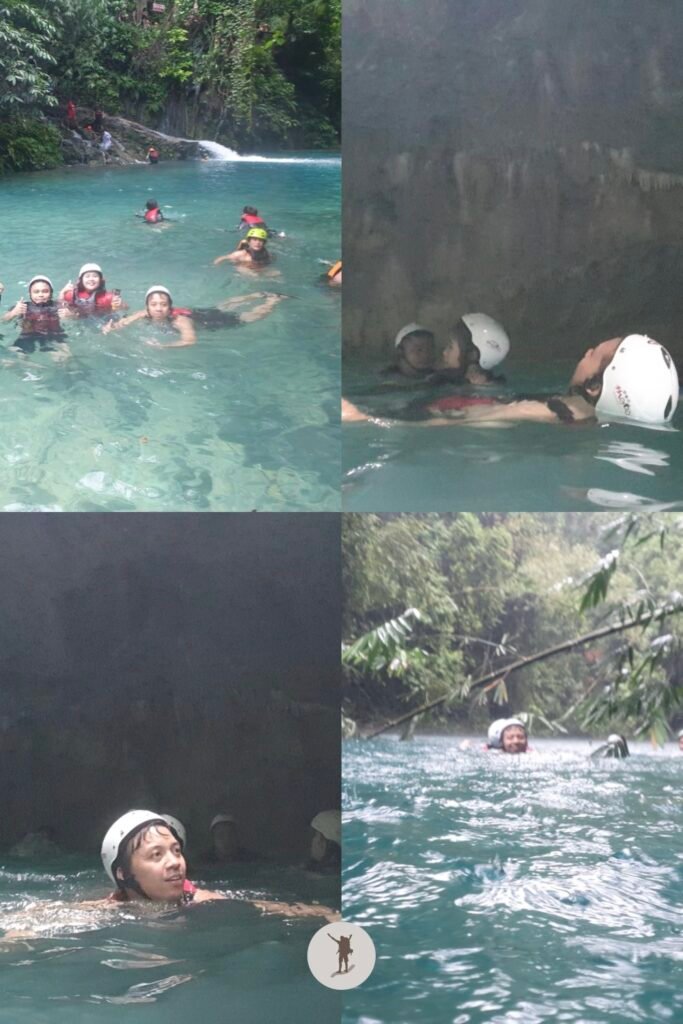
If you ever see photos of us without life vests and helmets, we removed them only (at safe locations) to appear more adventurous. LOL. We wore our gears back immediately after taking photos.
Guides
Speaking of guides, you will definitely need one for your canyoneering adventure. Everyone is required to have a guide along for the trip regardless of whether you are traveling solo or with a bunch of friends.
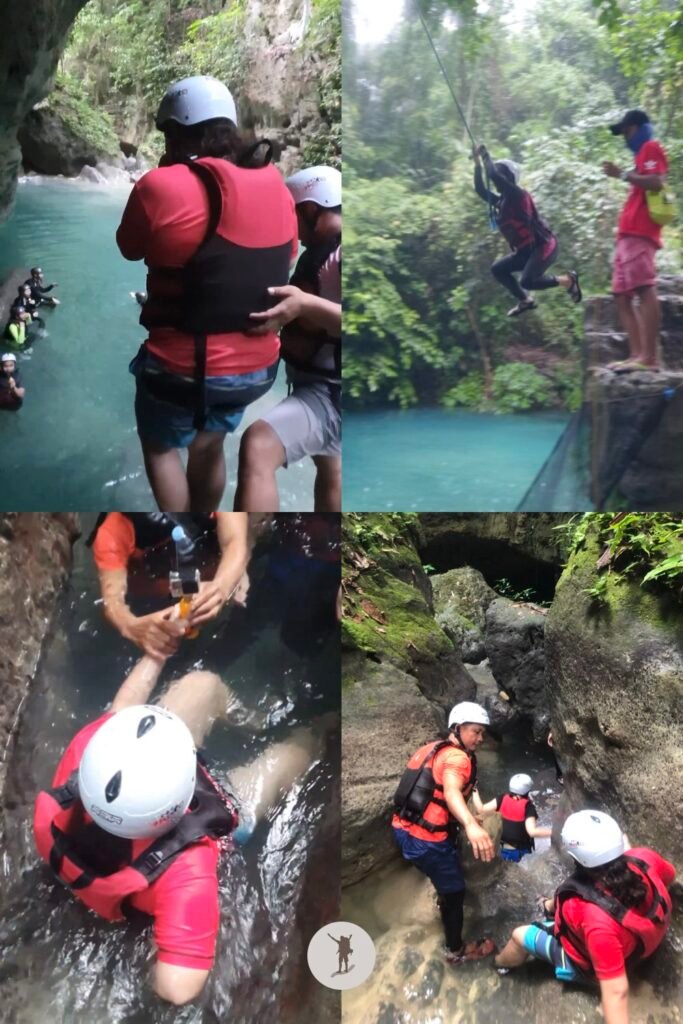
Most tour packages include the guide fees automatically so you usually do not have to worry about booking one separately.
One guide can look after a group of five to seven people at most. If your group has eight or more people, the rules state that you will need to have at least two guides to keep everyone safe.
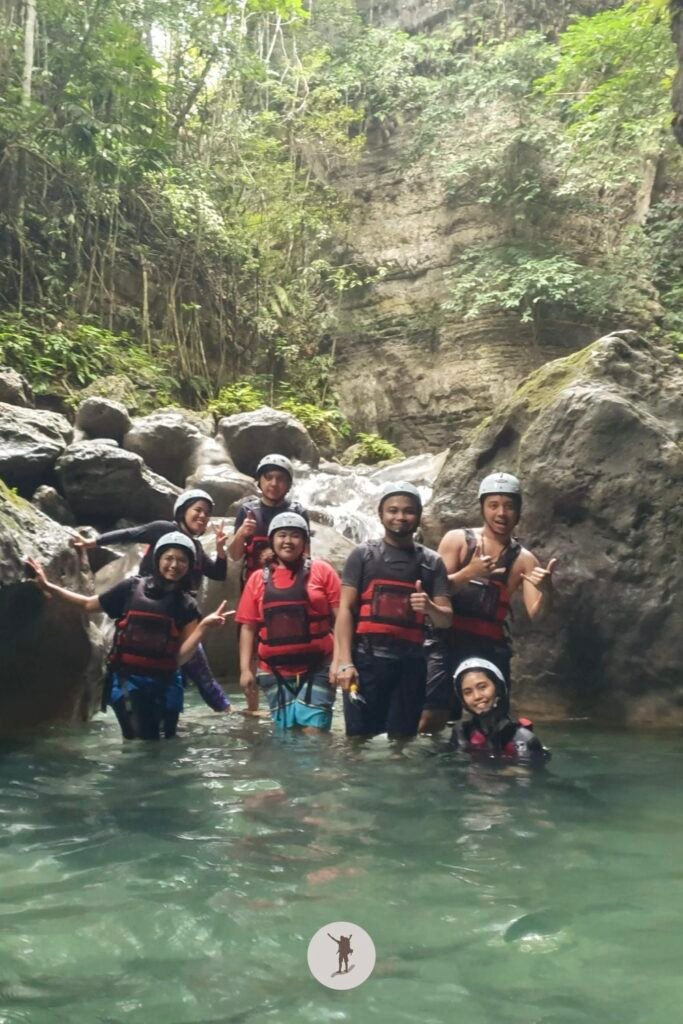
In our case, since there were seven of us, the rules allowed us to have a single guide.
However, looking back on the middle of our trip, we realized it would have been much better to have two guides instead. This is because having an extra person makes everything easier, especially when one person helps you navigate the trail while the other captures all your photos.
We realized we really should have requested two guides when one of our friends had a small accident on the trail.
It was not a serious injury, but he was moving a bit slow so we decided he should take a ‘shortcut’ path instead. The rest of us kept going on the main trail, but our guide had to call for another staff member to come and help our friend first.
Having one guide is usually perfectly fine, but if you travel as a group, having that extra backup would have made things a lot smoother when that unexpected situation happened.
Tipping is not required, but these guides are so professional and helpful that you will probably want to give them something extra. They are especially great at taking photos, which makes the whole experience even better.
Our group decided to give each guide 50 pesos from every person since we were so impressed with their hard work.
Good to know: the guides who go with you are all officially certified by the local government for safety and rescue. Our guide mentioned that everyone has to complete special training before they are allowed to help tourists with canyoneering. This means you are in good hands because they really know how to handle the equipment and keep you safe during the adventure.
Canyoneering Route
Previously, I mentioned there is a ‘shortcut’ path, but it is actually more like an alternative path for anyone who feels nervous about jumping off cliffs into the water. From what I saw during our trip, there are several places to enter this route along the main trail which makes every single jump optional.
That said, I encourage you to avoid the alternative route if you can. The best part of canyoneering is getting to experience the thrill and excitement of jumping into the water on the main trail. You really do not want to miss out on those amazing moments!
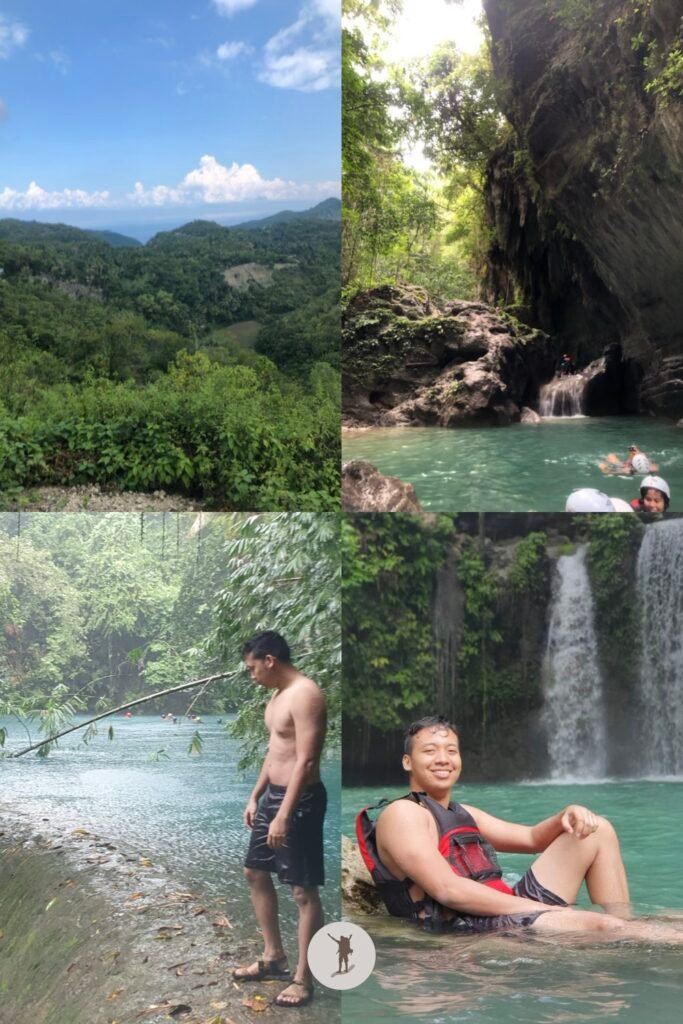
There’s a lot to share about the main canyoneering route, and I wrote a whole separate blog post with all the details. I talked about our favorite parts of the trip, the most beautiful views, and where we stopped to eat. You can also read about what to expect when you finally reach Kawasan Falls, which is where the canyoneering adventure ends.
Booking Your Tour
Apart from the weather and the time of year you go canyoneering in Kawasan Falls, another critical part of the preparation is booking a tour.
Remember, there is a set price for tickets you should know about.
As of this writing, the official rate is 1,500 pesos per person. The local government fixed this price so that tour companies can afford to keep you safe and follow all the rules, like having proper insurance and licensed guides.
IMPORTANT: If you see someone offering canyoneering for a lot less than that, you should ask them why or choose a different operator to make sure you stay safe and avoid getting scammed.
To ensure you have a great trip and avoid any trouble, it is a good idea to book your tour through a Moalboal Resort Dive Center or the main Kawasan Canyoneering Headquarters in Badian. You can also walk-in and book a tour in person, where they will find a guide for you right then and there.
That said, keep in mind that Kawasan Canyoneering is a very famous place and one of the best things to do in Cebu. The local government limits how many people can visit each day to keep the area from getting too crowded and to protect nature.
If you try to walk in without a reservation during a busy time of year, there is a chance you might not get a spot to go on your adventure on the day you arrive.
It’s always a smart move to book your canyoneering trip through sites like GetYourGuide, Klook, or Viator to make sure you get the specific date and time you want.
I really suggest this for travelers coming from other countries. The best part about booking online is that you can usually cancel or change your dates as long as you do it at least 24 to 48 hours before your trip starts.
You can also book by messaging the tour operators directly on WhatsApp, Messenger, or Facebook. This works well for local travelers who want to use e-wallets like GCash or Maya to pay for their trip. Again, just be careful and avoid offers that seem way too cheap compared to the rest.
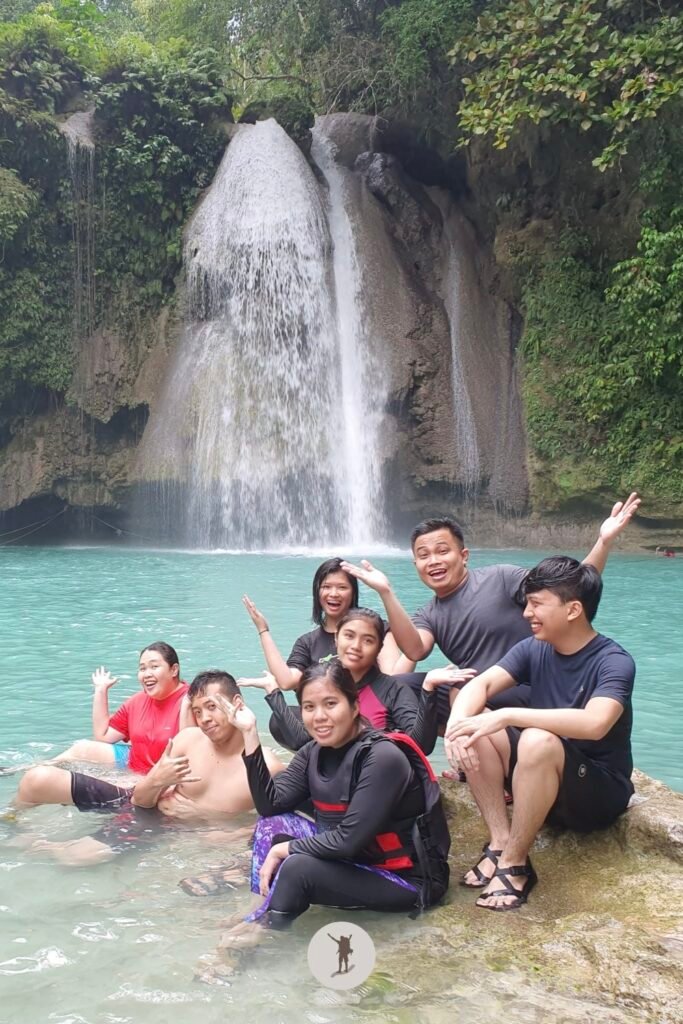
At the end of the day, booking through online travel sites is still the best way to feel sure you are with a trusted and official operator.
Travel Insurance
For an activity like canyoneering, getting travel insurance with the right coverage is a very important part of planning your trip. Since you will be hiking, swimming, sliding, and jumping off tall cliffs, it makes perfect sense why having insurance is a must.
Interestingly, did you know that I skipped buying travel insurance for our trip to Cebu?
My thinking was that my credit card already included some form of protection, and I truly felt that was enough. And looking back then, I see that it was a pretty risky decision. My card coverage did not actually handle costs from accidents or medical emergencies.
I only took the time to check the fine print because of the situation with my friend that I shared earlier. In that moment, I saw how lucky I was despite being so unprepared. Like, what if something bad had happened to me as well?
Anyhow, the past is in the past, but that whole thing really reminded me why having travel insurance with adventure sports coverage is so vital.
If you want to find out the cost of a policy, you can easily get a free quote from any of the travel insurance companies on my list (click the button below).
Conclusion
To sum it up, I think there are three main things you need to remember before you go canyoneering at Kawasan Falls.
- First, you need to be physically and mentally prepared for the adventure ahead. I am sure you will love the feeling of finishing every cliff jump, but you can only do that if you feel strong and brave enough to try. Doing those jumps made me feel soooo alive… and it made me realize that if I can handle this adventure, I can handle anything else that comes my way in life!
- Second, you should plan for a timely visit. It is important to think about more than the weather because having too many people around can change the whole experience. You will have a better time if you go when the canyon is quiet. Nobody wants to wait in long lines or see the beautiful views filled with crowds of other tourists. If you can, try to go very early on a weekday to have the best experience.
- Lastly, you need to find a reliable tour operator for your canyoneering trip. They are the ones who keep everything organized so your day runs smoothly. You do not want to deal with delays or problems that might ruin your fun. Be careful when choosing who to go with. Try to book online to keep your payment safe.
Good to know: some companies offer packages that include more than the Kawasan Falls canyoneering. You can find trips that also take you to see the Moalboal sardine run and the Oslob whale sharks. These packages are a great way to see as much as possible and make the most of your day exploring.
Disclaimer before you go, please keep in mind that the rules and regulations could change after our trip. Some parts of the canyoneering trip might also be closed because of bad weather like big storms or typhoons.
For the latest updates, you can check WhyCebu or the official Facebook page for Badian. That is all from me, and I hope you have an amazing time on your canyoneering adventure in Kawasan Falls.

Planning a Trip to Cebu?
I am here to help you plan your journey and ensure you have an incredible time. You should check out my travel maps, planning tools, itineraries and tips, which are all derived from my own adventures in Cebu.
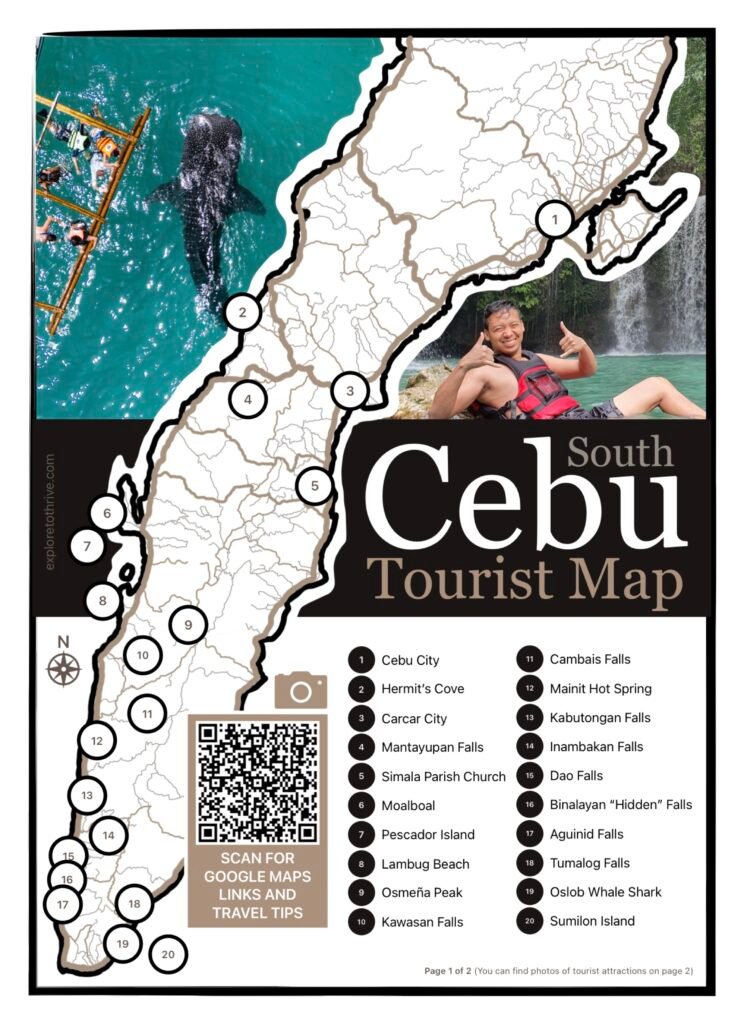
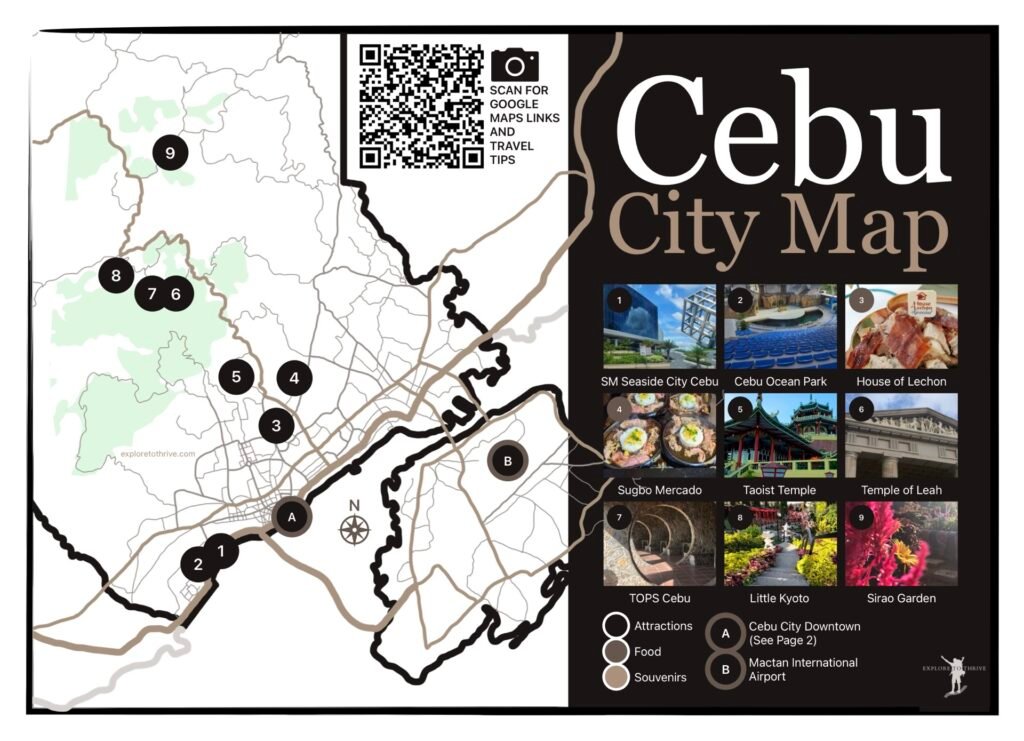
View my maps for a visual guide to discovering attractions.
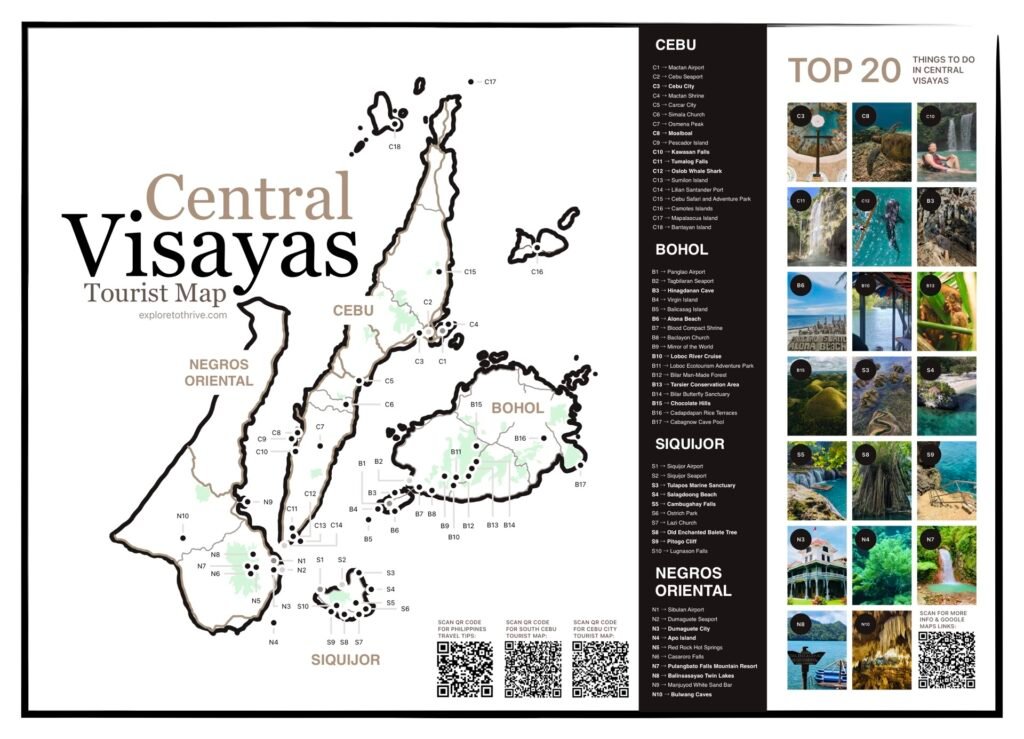
Here are my itineraries to spark your inspiration.
Avoid the setbacks we encountered; check out the tips for making the most of your trip to Cebu.
My travel planning resources page has everything you need to get fully prepared.
From this page, you can find the best hotels, cheap car rentals, affordable flights, and travel insurance. You can also book the top 3 unmissable activities in Cebu. You can find alternative experiences in Oslob, Badian, Sibonga, Moalboal, Bantayan, and Malapascua as well.
Of course, if you’re visiting Cebu City and if you want to go beyond Cebu, you can discover nearby destinations like Bohol, Siquijor, and Dumaguete, the page also provides helpful tools for you.
Thank you for reading
I hope my trip and experiences spark ideas for your travels and help you plan your next trip. But before you go, if you haven’t checked it out yet, drop by my homepage so I can give myself a proper introduction. Catch you there!
Support Explore to Thrive
If this post brought you value, please help me keep this blog growing by checking out the services I recommend below. They are affiliate links, meaning that if you purchase a ticket or book a service through them, I earn a small commission at no extra cost to you. Your support makes a real difference in helping me continue creating helpful content for you.