

In summary, here is everything I recommend you do and bring before you travel to South Cebu. The following list acts as an interactive checklist, which means you can easily mark the items you have ready for your upcoming trip.
Don’t forget to check out the rest of the post for extra tips and specific examples of when you will actually use the items listed below!
Main Preparation
Click the resources below to start planning your trip:
Clothing & Footwear Packing List
Gear & Electronics Packing List
Health & Personal Care Packing List
Guide Introduction
South Cebu was the second part of our trip through Central Visayas. There we spent four days exploring the region from its beaches to its tallest mountain.
The spectacular marine life in Moalboal, the adventure through the canyons of Kawasan Falls, and the moments with the whale sharks in Oslob were the highlights of the whole experience.
In case you’re wondering, you can head over to my other blog post to find out why we picked South Cebu over North Cebu.

Click the images below to enlarge
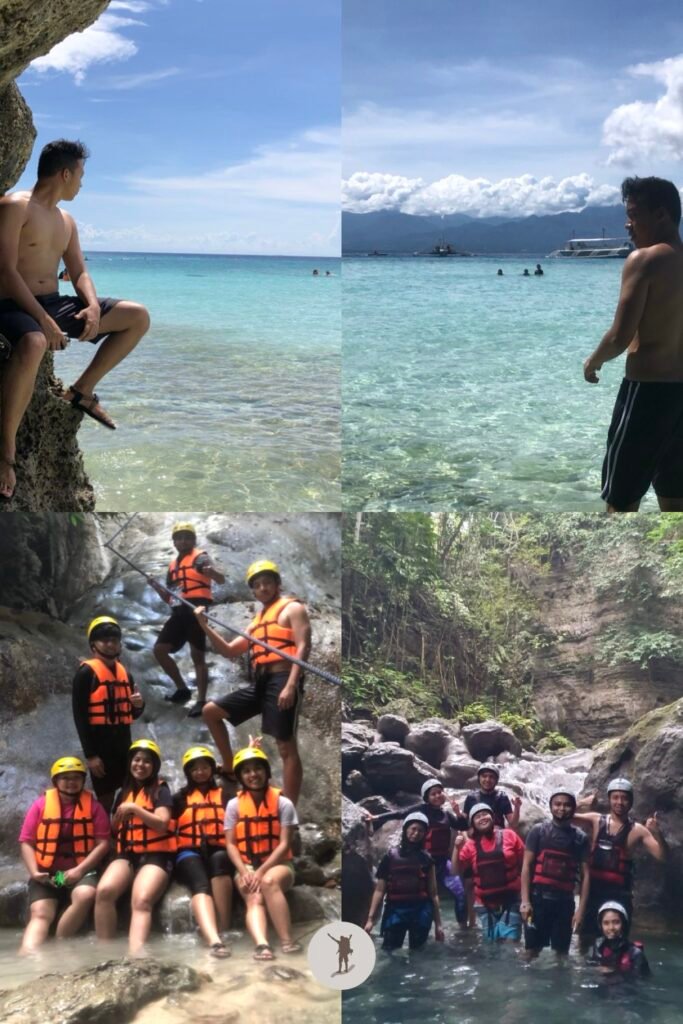
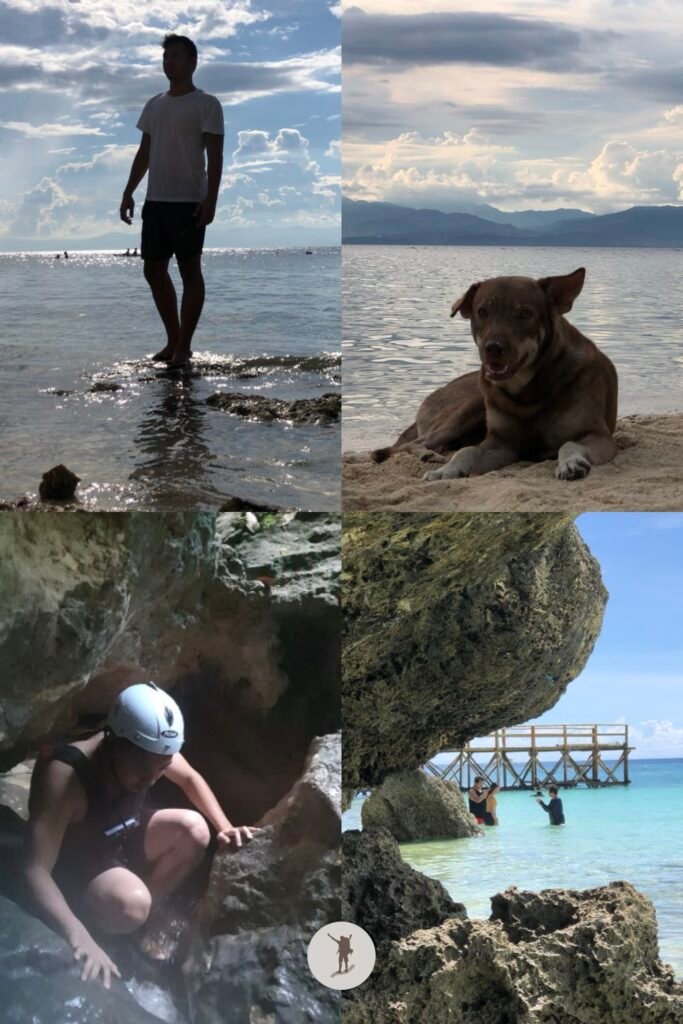

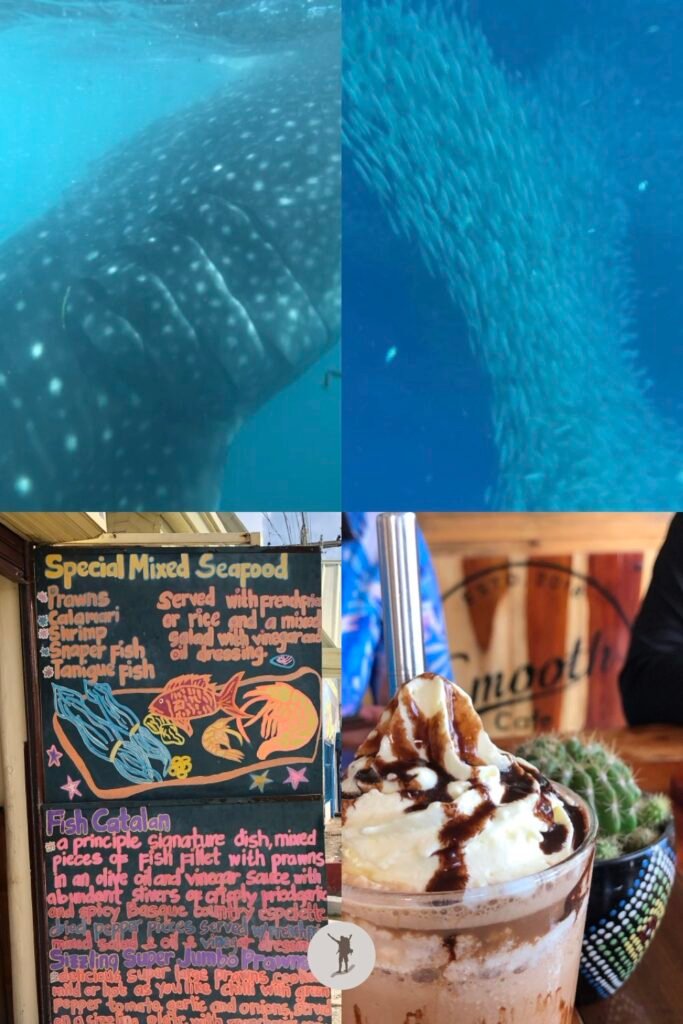

Gonna be honest with you, our trip had a few little mishaps and did not turn out perfect. For example, we dealt with a delayed flight and one of my friends got a minor leg injury after jumping into the water.
But, all in all it turned out to be a blast! We made so many memorable experiences that my adventurous mid-20-year-old self absolutely enjoyed. I was thrilled. Wonder filled me. I had so much fun!
I must say, though, I am thankful to my friend Erick, who made all the fun possible. His solid travel planning and the way he coordinated with a local guide were impressive. He helped us get prepared and organized so everything would run smoothly.
Let me fill you in on how we prepped before we left. I am also sharing some takeaways from the trip, like stuff we could have done or brought to make things even better. This way, you can also have a wonderful time when you visit Cebu too.
Hi reader! It’s Eljon, and before we continue, I want to welcome you to my blog, Explore to Thrive. Here, I share my experiences with traveling, reflections on spirituality, personal growth and insights on building an online business, all to make a difference. But my mission goes beyond that. You can learn more about what I do by visiting my homepage.

Get to Know South Cebu, Cebu City, and Central Visayas
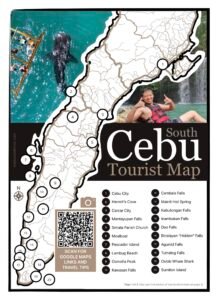
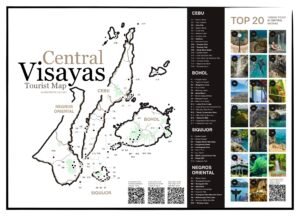
Here’s something important: I want to share some maps I put together that highlight the famous tourist stops and those quieter, more local favorites. They should assist you in planning quickly and ensuring your travel experience is more rewarding. Feel free to access the various maps linked below.
It’s really important to find the right area to stay in South Cebu. Some top attractions are not close together; they are actually several hours apart. If you pick the wrong location, you could end up spending more time on the road than actually exploring.
Check out the map where I show the best towns along with tips on where to stay in my other blog post linked below.
Essential Things to Pack for Your South Cebu Trip (The Details)
One thing I realized while preparing for our trip is that a 7-kilogram carry-on limit is not enough for a multi-day vacation, especially with all the outdoor adventures we have planned.
If ever you are heading out on a multi day trip and booking your flight, remember to include a checked bag at checkout so you have plenty of space for the gear and essentials we will talk about.
Group travel tip: we went to Central Visayas as a group of seven for a five-day trip. During the time we were planning, we realized that a 20-kilo checked bag for every single person would be way too much. To save money, only four of us added baggage when we booked our tickets. We shared these bags by having two people split each 20-kilo limit. The fourth bag was then used for our seventh member’s belongings, leaving about 10 kilos of extra room for all the souvenirs we planned to bring home.
Attire & Outfits
Where I actually figured out that the 7 kilo carry on limit was a problem wasn’t even when I was trying to zip my suitcase shut. It was earlier while I was still picking out which outfits to pack.
We were told not to bring only one set of garments for each day, but to bring two or even three if you avoid wearing your pajamas twice. In doing that, I reached the 7 kilo weight limit before I even finished.
You know what? I am glad I followed that advice.
While it is not really bad to wear the same clothes you used for canyoneering in Badian (for example) for the rest of the day, it may not feel that pleasant to stay in that sticky outfit until tonight.
Imagine climbing into the car or grabbing a bite at a restaurant while soaking wet. Or consider how itchy your skin under the fabric might feel since the ocean water you dived or snorkeled in is not exactly clean.
For instance, you will definitely want to change your outfit after your Oslob Whale Watching experience.
Why? Well, the water looks clear, but the scent of the tiny shrimp that the boatmen feed to the Whale Sharks sticks to your clothes long after you leave the sea. That is when that spare set of clothes you brought along for the trip and put on after an adventure becomes very useful.
With all that said, avoid packing any random clothes. You might prefer wearing darker outfits. Light colored clothes show every stain or mark from wearing the life vest while island hopping, sliding down the rocks at Kawasan Falls, or climbing the steep walls in Aguinid Falls.
Ideally, you should bring the following:
| Activity | Recommended Attire | Why? |
|---|---|---|
| Canyoneering | Rash guard + Tight athletic leggings or long shorts | Protects skin from scrapes against canyon walls and prevents bruising during cliff jumps. |
| Snorkeling | Rash guard + Swimwear | Provides UV protection and a barrier against potential jellyfish stings or sea lice. |
| Hiking | Moisture-wicking T-shirt + Breathable shorts/trousers | Manages sweat in humid jungle terrain; avoid cotton which stays wet and causes chafing. |
| Island Hopping | Lightweight linen/cotton cover-ups + Swimwear | Easy to shed for swimming and provides breathable sun protection while on the boat. |
Remember, pick light clothes and quick-drying fabrics to manage the thick humidity and tropical heat. If historical and sacred places are on your itinerary, make sure you cover up appropriately.
Footwear
Regarding footwear, again, you should think about your planned adventures.
| Type | Best For… | Why? |
|---|---|---|
| Hybrid Water Shoes | Canyoneering & Snorkeling | Look for shoes with a thick rubber sole and toe protection. You will be trekking through rivers and jumping off rocks; flimsy “sock-style” water shoes won’t protect you from sharp stones. |
| Trail Runners or Hiking Sandals | Hiking (e.g., Osmeña Peak) | If you plan on hiking the peaks, bring shoes with deep lugs for traction on slippery limestone. High-quality hiking sandals work well if you prefer breathability. |
| Flip-Flops or Slides | Island Hopping & downtime | Perfect for the boat, the beach, and walking around town. You’ll want something easy to slip on and off when moving between the sand and your accommodation. |
In my case, I brought a pair of sandals and flip flops. I wore the sandals for all of our outdoor adventures.
Canyoneering in Kawasan, trekking waterfalls in Aguinid, snorkeling in Pescador and Moalboal, or boating to the Sumilon Island sandbar, I wore sandals the whole time.
Did I have any issues? Absolutely none.
However, I suggest wearing a new pair or ones with outsoles that still provide solid traction and grip. You will need those, from the moment you step onto the boat to the moment you plunge off a 50 foot cliff into the turquoise water. Slipping is not only embarrassing but definitely dangerous.
About the flip flops? Used them inside our rooms and when we headed out during evenings to grab a bite and relax on the beach. I did not like wearing soggy sandals all day.
My friends, though, brought rubber shoes. However, I did not see them wearing those shoes during the adventure. They wore them at the airport and when we visited the city after the activities.
Need an idea for your one day trip to Cebu City? I created a simple itinerary for you to follow.
First Aid Kit
Like I said earlier, one of our mates got hurt during our trip, though luckily it was not serious.
It happened while canyoneering in Kawasan Falls during a jump into one of the pools from a rock. I am not sure of the exact details because I was further ahead on the trail at that time. But as far as I know, he was unable to finish the main trail of Kawasan and took the shortcut to the end with another guide that our guide called through a radio.
With that in mind, it highlights the need to be ready for such situations.
Were we ready at that time? Of course! We brought a small first aid kit. After canyoneering we went back to our homestay and applied some ointment and a bandage around his leg.
In retrospect, though, I cannot imagine how our trip would have gone if the accident were serious or if I were the one who got unlucky. Not only would I find the trip so horrible, but also I could have paid so much on hospital bills.
Travel insurance is indeed a must especially if you’re going on an adventure.
Cash
What’s interesting about exploring South Cebu is that you can find shops even in places you wouldn’t expect.
For example, still in Kawasan Falls, the shops are not only at the start and end of the trail. We found barbecue and hotdog stands and small stores in the middle of the canyoneering trail!
They saved my growling tummy in the middle of the adventure, but it would not have happened if we had not brought cash during our visit.
The lesson? Always bring cash!
Snorkeling or Diving Gear
Call me whatever you want, but I found some of the snorkeling gear provided to us during the whale shark viewing a little bit off-putting.
There are new ones that seem okay, but there are those with mouthpieces that have already been gnawed, and they will make you imagine how many people have used the equipment already. It will also make you wonder whether they have been properly washed or disinfected.
Anyhow, if you are sensitive to such things, I highly recommend bringing your own equipment so you can have peace of mind and enjoy the snorkeling experience.
Dry Bag
Since South Cebu is mostly outdoor and water activities, bringing a dry bag is a must.
There are different kinds and brands of dry bags out there, but pick at least the one that will float on water. That can be a huge relief especially in the sea when if you accidentally drop your stuff in the water, it can no longer be retrieved.
During our trip, since we were going on an adventure as a group, we decided to bring one dry bag for everyone. Then as we took the adventure, we asked our guide to hold and secure the bag for the entire time. That way, everyone in the group had no hassle thinking about their stuff and had fun.
Action Cam
Before our trip, I already realized I needed a dedicated waterproof camera for snorkeling and other water activities.
Told myself my iPhone would work fine for that purpose. But it turns out that was a bad move.
Since it has no wrist strap or truly secure way to keep it from falling or slipping out of my hand, I always felt pretty nervous in the moment, which stopped me from using the phone for photos or videos even when things were safe like on the boat or in shallow water that’s 8 or 10 feet deep.
The only time I worked up the guts to snap a photo with my iPhone was during our sardine run and whale shark watching experience. It was so breathtaking and epic that I told myself I had to record it regardless of the risk.
So yes, I suggest bringing an action cam so you can really enjoy the adventure while recording the trip.
But if you still prefer to use your phone, put it in a waterproof housing that prevents salt water from touching the charging port.
I had an incident before where I dipped my phone in the water while we were playing on the beach, and the next thing I knew, I could not charge my phone because the port had corroded. With enough brushing (with a toothbrush lol) and cleaning with fresh water, though, I cleared the salt corrosion and managed to make it work.
Sunscreen
Visiting South Cebu means spending time on the beach and seeing marine life. You’ll be under the sun most of the time, and you’ll need protection. Sunscreen.
However, remember that wearing sunscreen is not allowed in Whale Shark watching. It’s dangerous for some marine life, particularly Whale Shark, as the staff would say during the briefing before the actual watching.
As far as I can remember, even reef-safe sunscreen are not allowed. If you wear them before you arrive, you’ll be asked to remove them by taking a shower in nearby shower.
Using rash guard is an alternative for sunscreen for sun protection, though.
Soap
Speaking of taking a shower, we have found that there might be a couple of times where you will have to rinse off away from your hotel.
Besides the trip to see the Whale Sharks, this usually happens when you go snorkeling with the sardines or head out to explore the falls.
Why? It can feel pretty gross to go through your afternoon smelling fishy. You will also probably want to wash away any dirt or mud that sticks to you after climbing over wet rocks or sliding through the stream.
With that in mind, it helps to carry some soap (liquid soap preferably) to get yourself cleaner than using water alone.
Tumblers
Although bottled water is sold at all the tourist spots in South Cebu and you can buy a bottle for less than a dollar, I would still suggest carrying a tumbler.
First, this helps Cebu stay clean and keeps plastic away from the marine life. Second, it helps you save your money!
Usually, homestays and hostels provide drinking water so you can fill up your tumbler before you head out for the day. In our homestay our landlord provides us with drinking water (5 gallon blue water jugs) that is refilled every day.
If you can bring a lightweight thermally insulated tumbler, that is even better. Drinking ice cold water while at the beach or island hopping would be so nice. You can fill it with a cold drink when you eat your breakfast in a cafe or restaurant.
Other Things to Pack
Apart from the items already listed, you should probably pack a water-resistant power bank so you can keep your devices charged even when things get a bit splashy.
The sticky summer humidity in the Philippines is a lot to handle, particularly during the peak of the dry season in April and May, so bring a rechargeable handheld fan to help you deal with the sweaty heat.
International travelers should also make sure to grab an adapter for Type A wall outlets like the ones in the US, a passport with at least six months of validity left, and a current driver’s license if you plan on renting a vehicle.
Adventure Ready Body
Now that we’ve finished the packing list for your Cebu getaway, we have to remember that prepping involves more than packing your bags.
You should also get your body ready for the action. Expect plenty of moments where you will be hiking, climbing boulders, and spending hours swimming or treading water. Muscles that are ready for these activities make the whole experience better.
In my case, I felt really stressed at work before our trip. I was constantly working out to relieve that stress. Push ups, squats, jumping rope, and similar exercises helped me. That really got my body ready for the trek and canyoneering we did on Cebu.
IMPORTANT! DO NOT FORGET
Booking reservations is another important task to handle before you start your trip. It’s necessary because it provides you a guarantee that you will actually be admitted or allowed to join the experience.
Cebu is one of the top destinations in the Philippines. Many tourists come here and attractions are now regulated on how many visitors they can take in to protect the environment and avoid overcrowding.
You wouldn’t want to arrive at the entrance of Kawasan Falls or Oslob Whale Shark only to find out that the next available slot is the next day before lunch!
During our trip, our local contact did the reservation for us. He was affiliated with some of the tour operators so the bookings went smoothly for us.
If you don’t have a local contact in Cebu, you won’t need to stress about finding someone to handle your bookings.
You can message the operators through their Facebook pages or simply use reliable travel platforms like Klook, GetYourGuide, and Viator where these guides offer their packages. From any of these sites, you can secure a spot in a couple of clicks. Totally easy.
What’s great about the tours on these platforms is that they undergo a double vetting process, first by the local authorities and then by the travel sites. You’re certain to get the top-tier experience required to make your vacation truly memorable!
For your convenience, you may click any of the top experiences listed below to begin browsing and reserve your slot.
- Snorkeling & Diving Activities in Moalboal
- Kawasan Falls Canyoneering in Badian
- Whale Shark Watching in Oslob
Summary
Alright that covers everything! I won’t recap all my points again, because I already listed the main takeaways in my checklist. I just want you to know that you don’t need to stress about your South Cebu getaway, particularly if you are a foreigner.
I may have written a lot here, but the locals in Cebu are among the friendliest people you will ever meet. Your guide, your homestay owner, and even the tricycle drivers you run into at a junction will be happy to help you out or give you an answer to any question you have about the attractions in Cebu.
Pack everything you need, know the basics, and arrange your trips beforehand, and you will be fine.
I’m not saying that it’s 100% safe, still, common sense is the best practice all the time. But most of the time you will feel the wonderful kindness and warm hospitality of the locals on the island.
That was what we experienced and I truly believe that is also what you will find.
Enjoy your trip!
Planning to Visit Cebu?
I am here to help you plan your journey and ensure you have an incredible time. You should check out my travel maps, planning tools, and tips, which are all derived from my own adventures in Cebu.
Click the maps below to view or download them:
Cebu City
South Cebu
Central Visayas
My travel planning resources page contains everything you need. Find the best hotels, cheap car rentals, affordable flights, and travel insurance.
From this page, you can also book the top 3 unmissable activities in Cebu. You can find alternative experiences in Oslob, Badian, Sibonga, Moalboal, Bantayan, and Malapascua as well.
Of course, if you’re visiting Cebu City, I also have tips for you. And if you want to go beyond Cebu, you can discover nearby destinations like Bohol, Siquijor, and Dumaguete.

Thank you for reading
I hope my trip and experiences spark ideas for your travels and help you plan your next trip. But before you go, if you haven’t checked it out yet, drop by my homepage so I can give myself a proper introduction. Catch you there!
Check Out My Newsletter
For new posts and updates on how I am growing this blog, subscribe to my newsletter.
Support Explore to Thrive
If this post brought you value, please help me keep this blog growing by checking out the services I recommend below. They are affiliate links, meaning that if you purchase a ticket or book a service through them, I earn a small commission at no extra cost to you. Your support makes a real difference in helping me continue creating helpful content for you.

Hotels & Stays

Guide & Tours

Car Rentals

Public Transport

Flights

SIM & VPNs

Insurance
You must be logged in to post a comment.