
Visiting Bohol Tarsier Conservation Area: Our Tips, Reminders, and What to Expect
Here is everything you need to know before visiting the Bohol Tarsier Conservation Area. Keep in mind there is a better alternative. Details are below.

Growing up in the Philippines, we were taught to be proud of our country for a lot of reasons.
Beginning with the unmatched hospitality, then breathtaking natural beauty close to paradise (a.k.a. Palawan), then a rich culture (like Sinulog), then diverse wildlife (for example, Tarsiers or Carlito Syrichta in Bohol), and more.


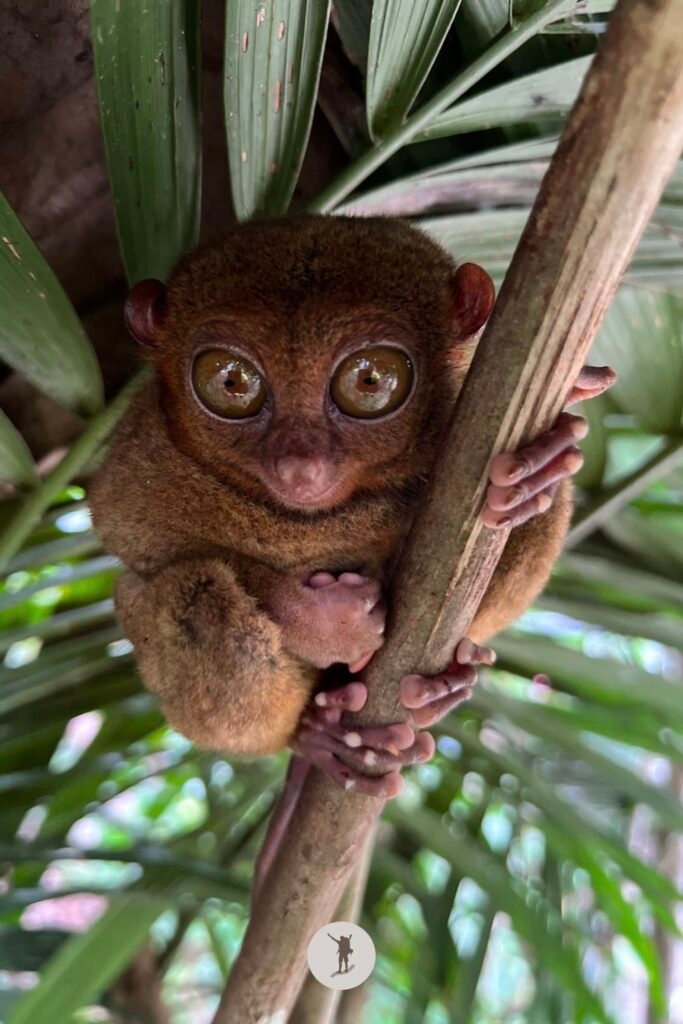
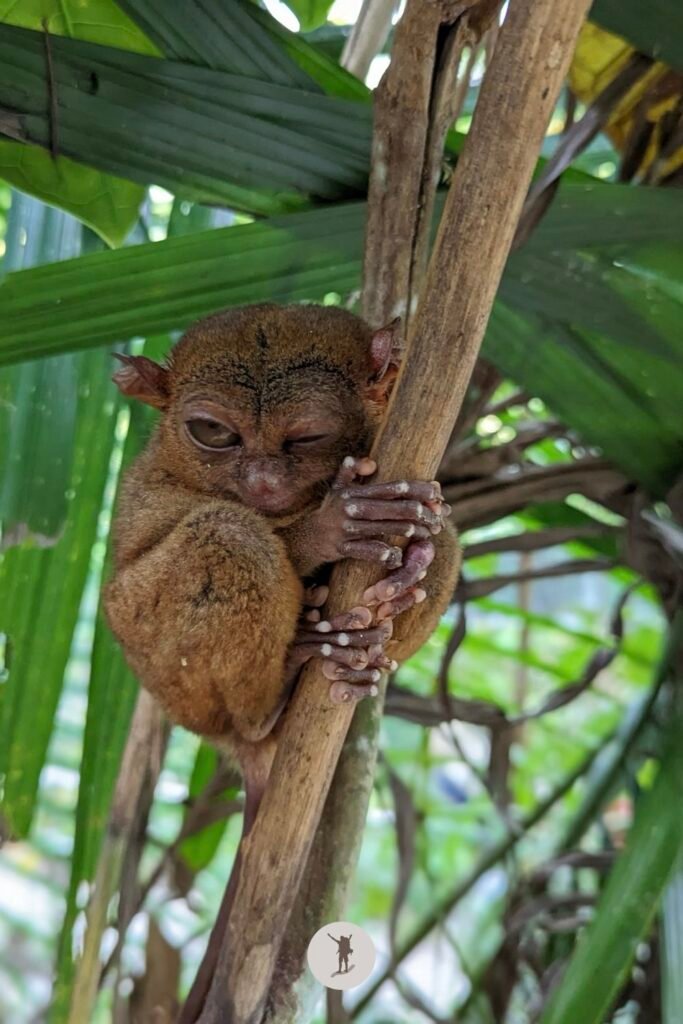
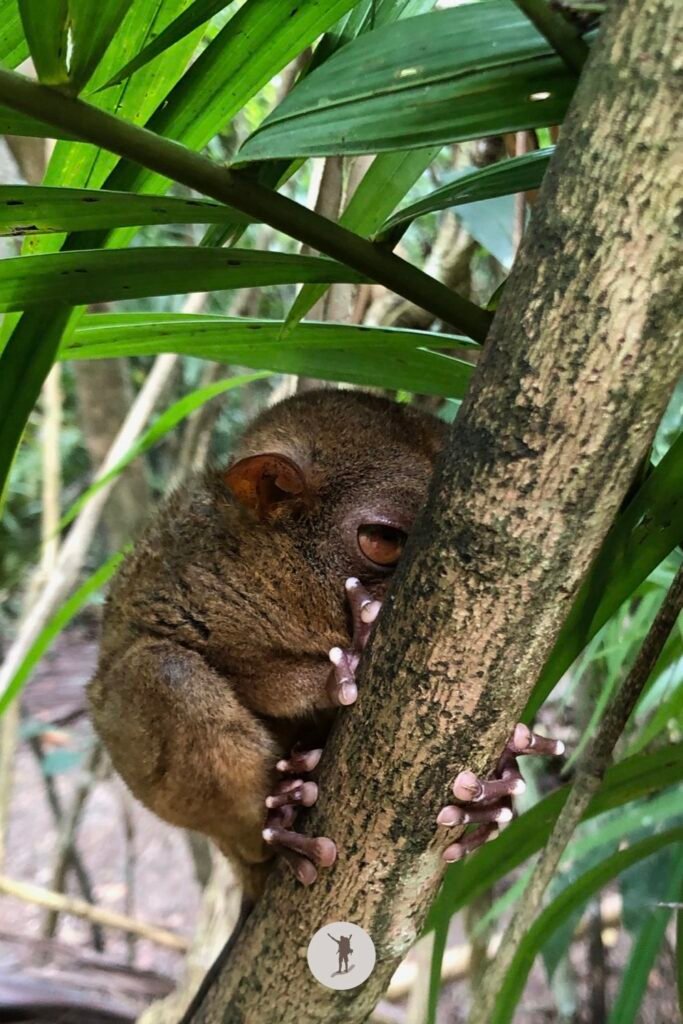
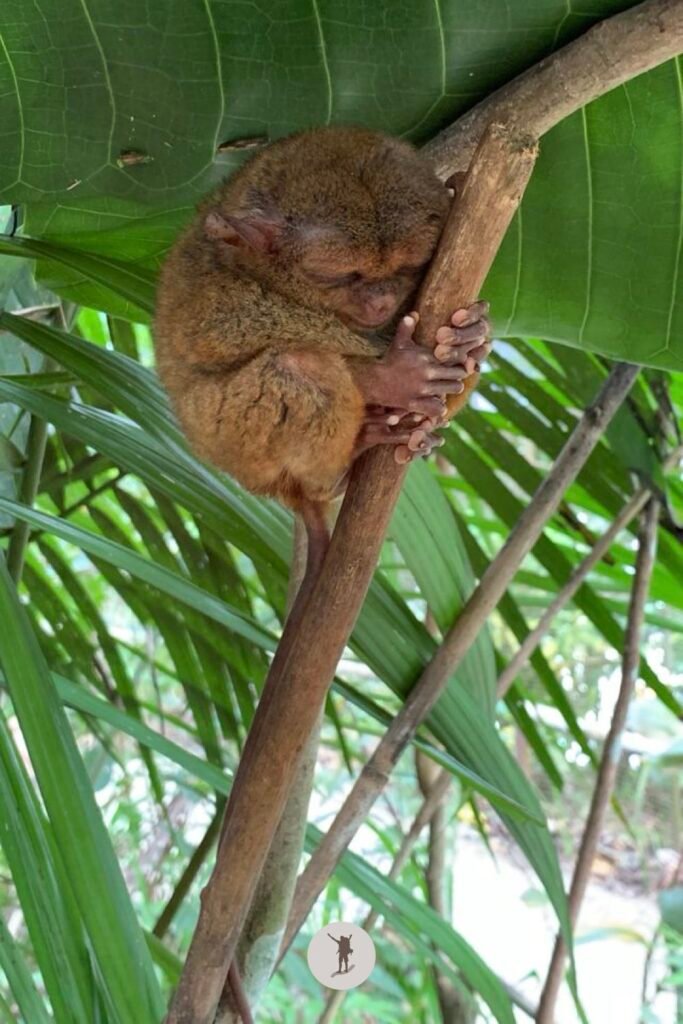

So when we took our 5-day trip to Central Visayas, we made sure Bohol was on our list. We spent our first day exploring Bohol with a guided tour. And the tarsiers? Seeing them was definitely a highlight, along with taking in the sights of the Chocolate Hills and enjoying a delicious lunch on the Loboc floating restaurant.
Yes, it’s amazing to see tarsiers in person because they’re super cute, BUT I must say our experience seeing the little primates turned out less than perfect. In fact, with what I’ve discovered as I write this post, I wish we’d done our visit a bit differently!
Let me give you our tips, things to keep in mind, and what to expect when you decide to see the tarsiers.

Hi! It’s Eljon and I want to welcome you to my blog, Explore to Thrive.
Here, I share my experiences with traveling, reflections on spirituality, personal growth and insights on building an online business, all to make a difference.
But my mission goes beyond that. You can learn more about what I do by visiting my homepage or by subscribing to my newsletter.

Where to See the Tarsiers
First things first: Tarsiers live in different parts of the Philippines.
According to my sources, they are found in parts of Leyte and Samar, but Bohol is really where these little guys are mainly looked after and shown off to visitors to raise awareness and support local tourism.
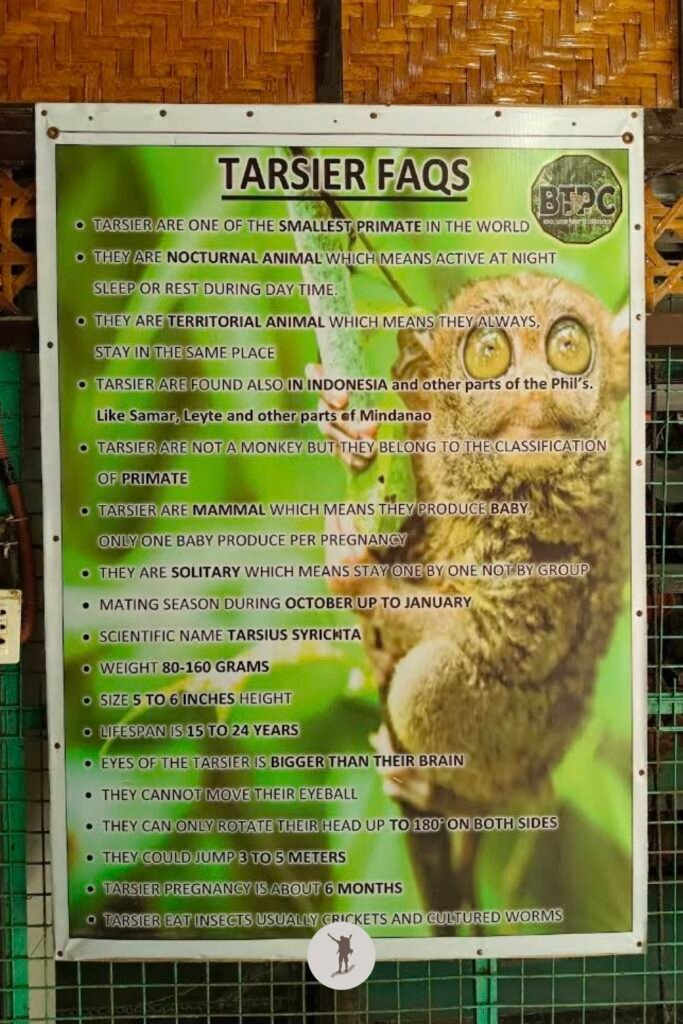
In Bohol, there are particularly two areas where visitors can have sure encounter of the Tarsiers. The most popular choice for first-time visitors is the Tarsier Conservation Area in Bilar. The other option is the Philippine Tarsier Sanctuary, located over in Corella.
The tour we joined that day brought us to the Tarsier Conservation Area, which I think was selected by the tour operator primarily to maximize the time of the tourists.
It is not only very close to top attractions, but the site is actually along the road to the Chocolate Hills from Loboc. Very convenient for day trip travelers.
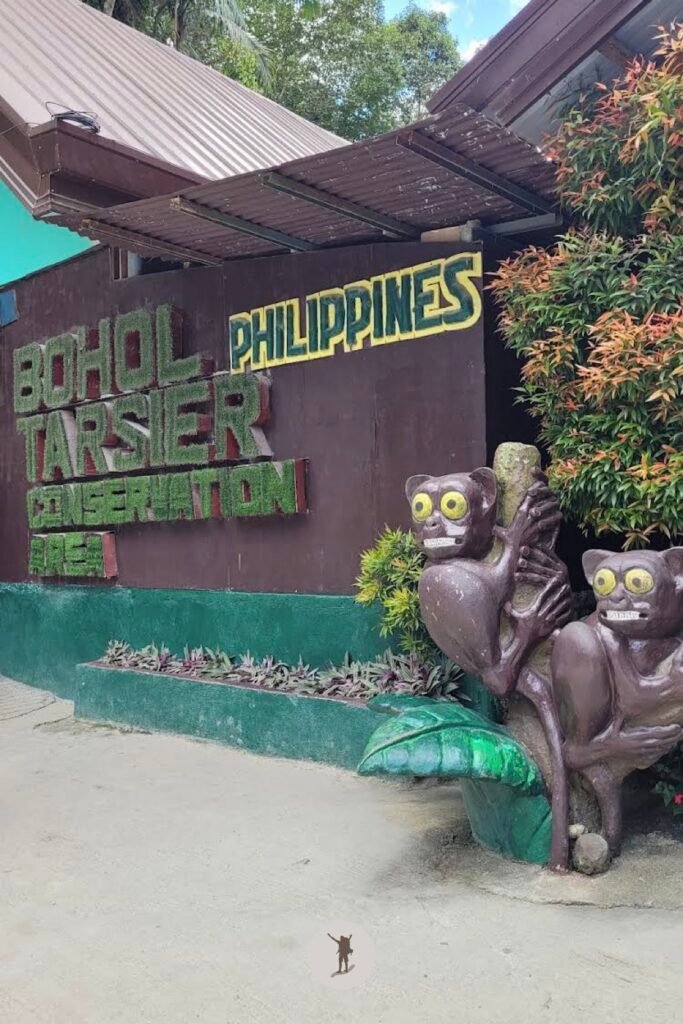
Our Experience in The Tarsier Conservation Area (What to Expect)
Based on our experience, visiting the Tarsier Conservation Area is pretty simple. It is a three step process: buy tickets, listen to a quick briefing, and head into the enclosed forest. If you count the gift shop at the end, that makes four steps.
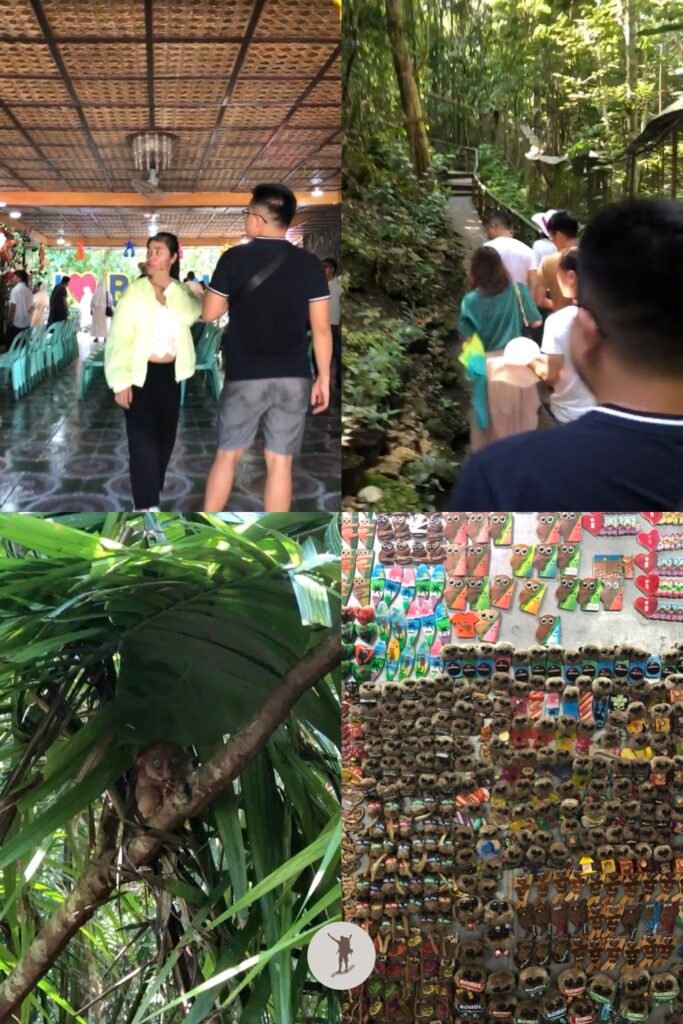
Tarsier Conservation Area was packed with tourists when we got there (I forgot to take photos), but buying our tickets went smoothly. Right after getting our tickets, we headed over to the trail into the enclosed forest where tourists can see the tarsiers.
But before we made it to the main path, a staff member welcomed us and gave us a quick list of dos and don’ts. It was really brief. Honestly, it felt like we were being rushed through because a whole crowd of tourists was right behind us.
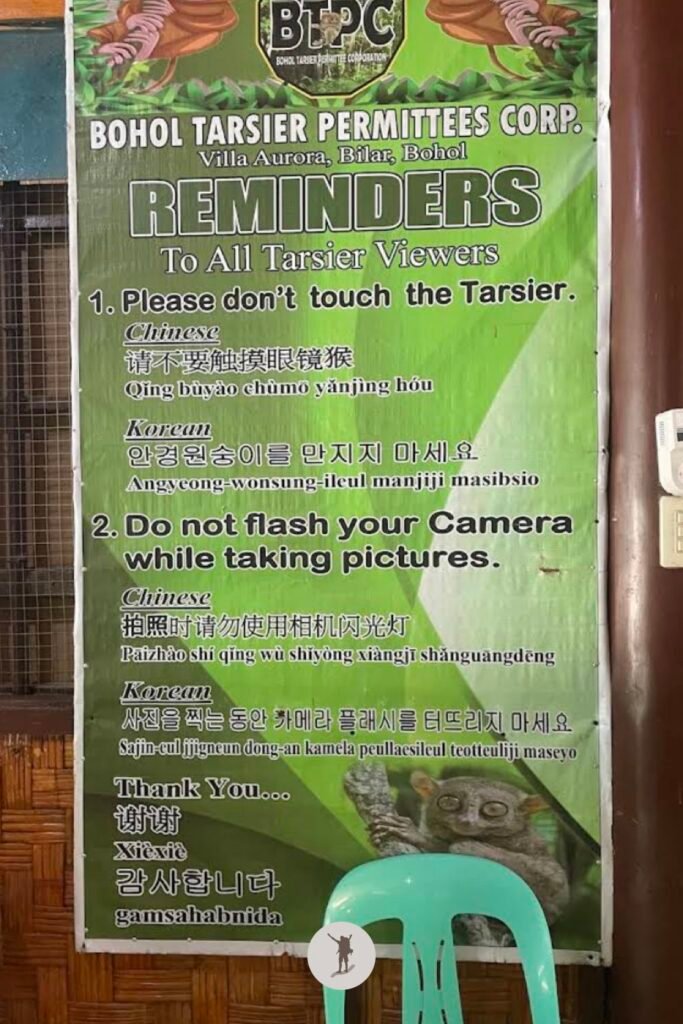
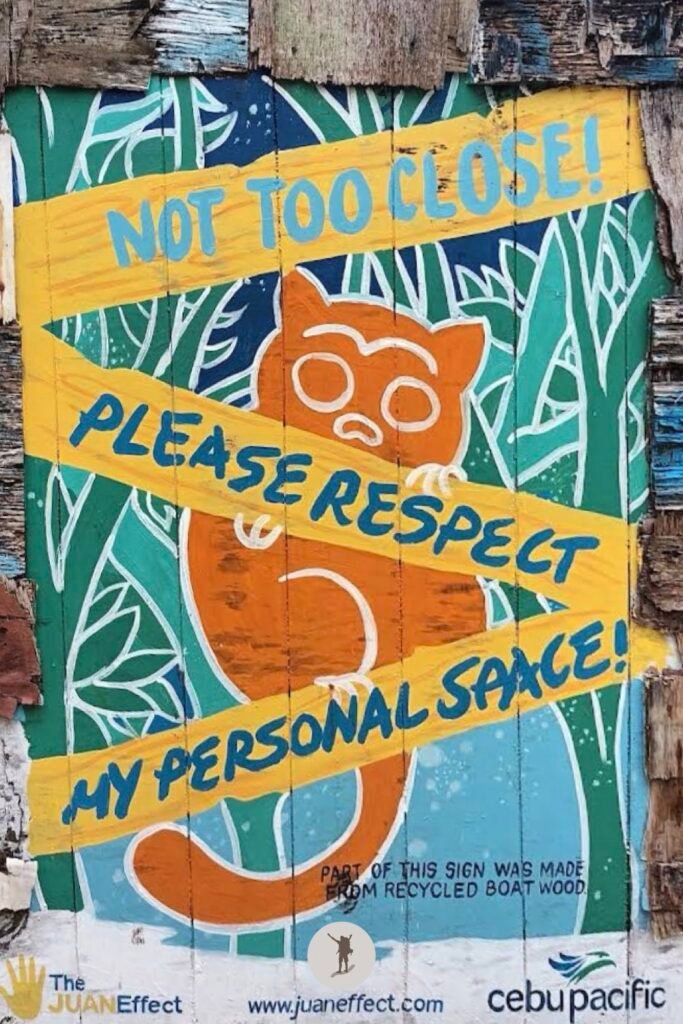
If I remember right, they basically just reminded us that tarsiers are nocturnal animals and might be sleeping when we see them along the way. We needed to keep our voices down the whole way and make sure our camera flash was off when taking pictures so we wouldn’t disturb them.
Not a moment we waste, we go straight to the trail after our briefing. And to tell you the truth, the tarsiers aren’t easy to see if you try to find them on your own.
If it wasn’t for the guide, other tourists pointing, taking photos, and children who got their eyes fixated to a branch of a tree, finding the tarsiers would not be that easy. Tarsiers pretty much blend in with everything while perched on the branches and hide under massive leaves.
But yeah, the first time I actually saw a tarsier, it felt amazing. The feeling is hard to describe, but it was definitely special, like, ‘finally, after all this time and all those social studies classes back in school… LOL.’.
It took us 15 to 20 minutes to finish the trail. Not too short, but not too long either. It was pretty much the perfect length to see a few tarsiers and enjoy how cute they are.
According to the staff, visitors can spot up to 8 tarsiers along the trail. But I think I only saw 4 or 6 of them. I didn’t really care about finding the rest after seeing the first few, because I felt like they all looked pretty similar. Like, just as cute as each other. Haha!
The trail leads to a souvenir shop, where I didn’t bother buying anything because everything was super expensive.
Should You Visit Tarsier Conservation Area? (The Verdict)
After our visit, we were satisfied seeing a few super cute tarsiers. And from that experience, if your goal is to just see a tarsier when you visit Bohol and you don’t mind the crowds, the Tarsier Conservation Area will definitely give you what you came for.
However, I could not help but notice the ethical concerns with seeing the tarsiers at the Tarsier Conservation Area. Particularly the crowd situation, which can be unsafe for the animals.
Tarsiers sleep during the day, and if they cannot get enough rest, their health is put at risk. There were signs everywhere asking people to be quiet, but I wish visitors would follow these rules more strictly.
Honestly, I felt a little guilty about the noise. I was not completely quiet with my friends during our visit, particularly the first time we saw a tarsier. We got carried away by how cute it was. But I stayed quiet for the rest of the visit after that.
For the staff, I really hope they implement some limits, like capping the number of people on the trail or setting a time limit inside the enclosed forest trail. The staff could also give visitors a more detailed briefing before letting them in. This would help visitors get why the rules matter so much for the tarsiers, while giving everyone a richer experience.
I was really looking for something like this during our visit to the Tarsier Conservation Area, but it wasn’t there, or maybe we just missed it.
Organize Your Trip:
Reminders When Visiting the Tarsiers
With all this in mind, if you decide to check out the tarsiers at the Tarsier Conservation Area (and the better alternative I’ll mention next), let’s make sure we do our best to follow the rules.
- No flash photography.
- Maintain total silence and speak only in low whispers.
- Do not touch or reach out the tarsiers.
- No selfie sticks or close-up photography gears that may startle the tarsiers.
- Stay on marked trails.
Tarsier Sanctuary: Better Alternative to Tarsier Conservation Area
Should I return to Bohol to see the tarsiers one more time, my plan is to visit the Philippine Tarsier Sanctuary in Corella.
From what we experienced at the Tarsier Conservation Area and what I learned about the Philippine Tarsier Sanctuary, it’s the better option. I recommend you do the same if you get the chance.
The main reason why I suggest it though is that the sanctuary is run by the Philippine Tarsier Foundation, a local non-profit. Its mission is mainly to keep these little guys from going extinct, spread the word about nature, and run research to help them out. Unlike at the Tarsier Conservation Area, your entry ticket at the sanctuary is basically a direct donation to save the tarsiers.
The foundation also aims to give locals better job options through eco-tourism. Not only do you get to see the tarsiers, you get to support the local community too.
When it comes to the experience, expect that it’s going to be way more eye-opening than what you get over at the Tarsier Conservation Area. These two bloggers (this one and this one) documented their trip, and according to them, your visit includes:
- watching a short video about the foundation and what they do,
- watching another quick video on respecting the animals and their home,
- going on a peaceful guided walk down the forest trail, and
- learning awesome facts from your guide about what tarsiers eat, how they live, and the struggles they face.
These bloggers emphasize that while the tour was short, taking only about 15 minutes, it was nice and relaxed and super informative. For more information about the Philippine Tarsier Sanctuary, you can visit the website of the foundation.
How to Get There (Conservation Area & Sanctuary)
Getting to the conservation area or sanctuary is very straightforward.
From Dao Integrated Bus Terminal, hop on a jeep going to Corella and ask the driver to drop you off at the junction going to the sanctuary. From the junction, the sanctuary is within walking distance, like a 10 minute walk or so.
If you’re visiting the Tarsier Conservation Area, you can also start from Dao Integrated Terminal. There you can find buses going to Carmen, hop on one and tell the conductor to drop you off at the Tarsier Conservation Area in Bilar. The site is right along the road.
For convenience and a more flexible schedule when visiting either of these places along with other Bohol attractions, your best option is to rent a car or join a tour. When we visited Bohol, we traveled in a group, and we found that joining a tour was completely worth it! We really maximized our short trip by seeing more than five attractions in just six to seven hours.
That said, if you want to visit the Philippine Tarsier Sanctuary, I think you’ll need to find a customizable tour or rent a car instead. I think most tour operators prefer taking people to the Tarsier Conservation Area to avoid going out of the way.

Planning a Trip to Bohol?
Bohol is one of the highlights of the Philippines. Don’t miss out on what makes this island so special. Here’s our itinerary to spark some inspiration.
If it’s your first time visiting Bohol, you’ll definitely find everything we discovered and learned on our trip helpful. Learn what to avoid, what not to miss, when to visit, how long to stay, and so much more. Read all my tips so you can have a truly wonderful time in Bohol. Hit the button below.
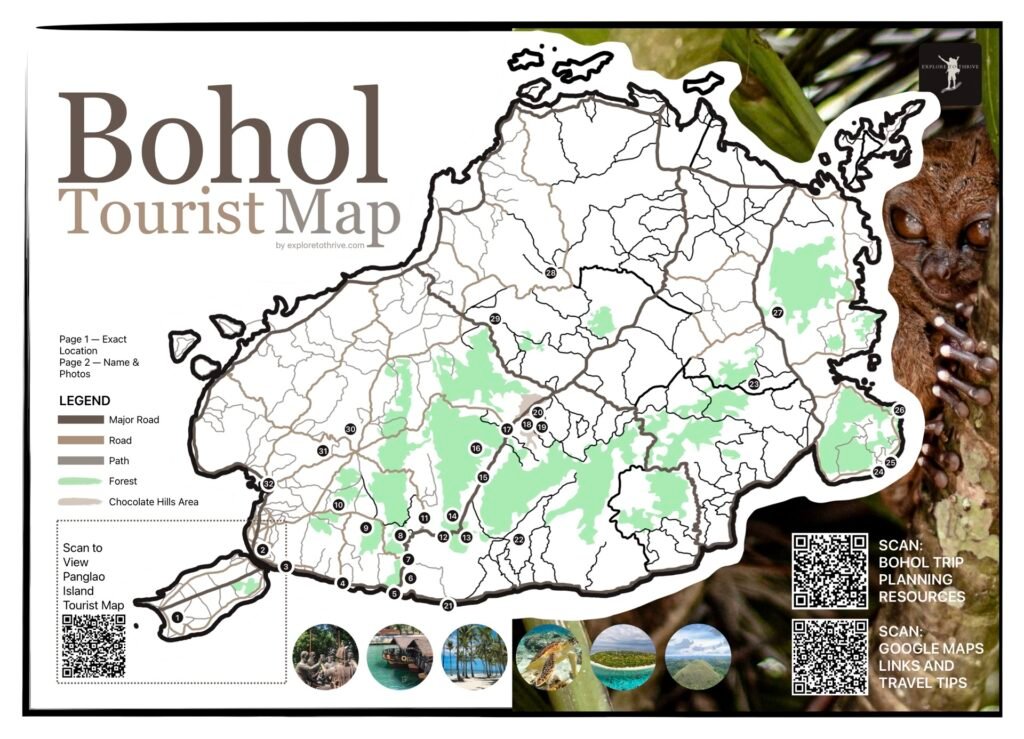
View my maps for a visual guide to discovering attractions.
Whether it’s your first time or your hundredth time visiting Bohol, my map of Bohol will help you plan your trip. It shows exactly where the top spots, hidden gems, and essential services are located so you can create a custom itinerary that fits your travel style.
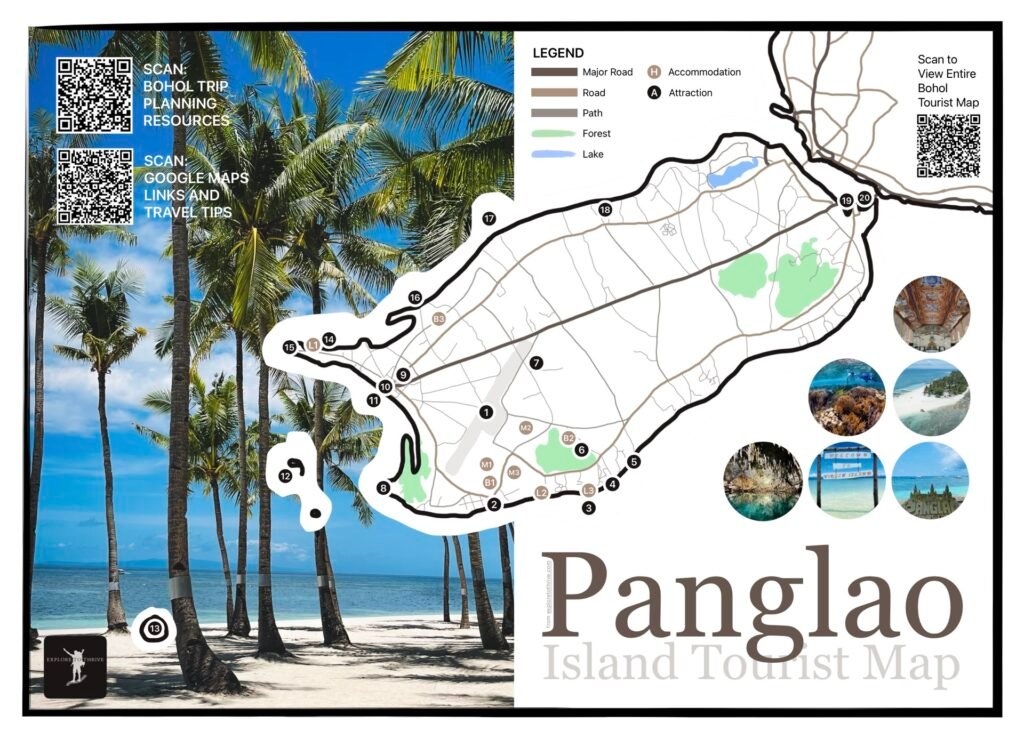
Bohol Island has a smaller neighboring island called Panglao Island. This is where you’ll find the main airport for Bohol, but there’s so much more to it! Some of the most stunning beaches, spectacular caves, and breathtaking marine sanctuaries in the country are here.
Important: Organizing your trip, like booking tours, ferry tickets, places to stay, or vehicle rentals, shouldn’t feel overwhelming. That’s why I created my Bohol Travel Planning Page to help you prepare for your upcoming adventure. It serves as your complete guide to remove the stress so you can focus on getting excited.
Hit the button below to start planning.
Explore Central Visayas
There’s more to see in Central Visayas.
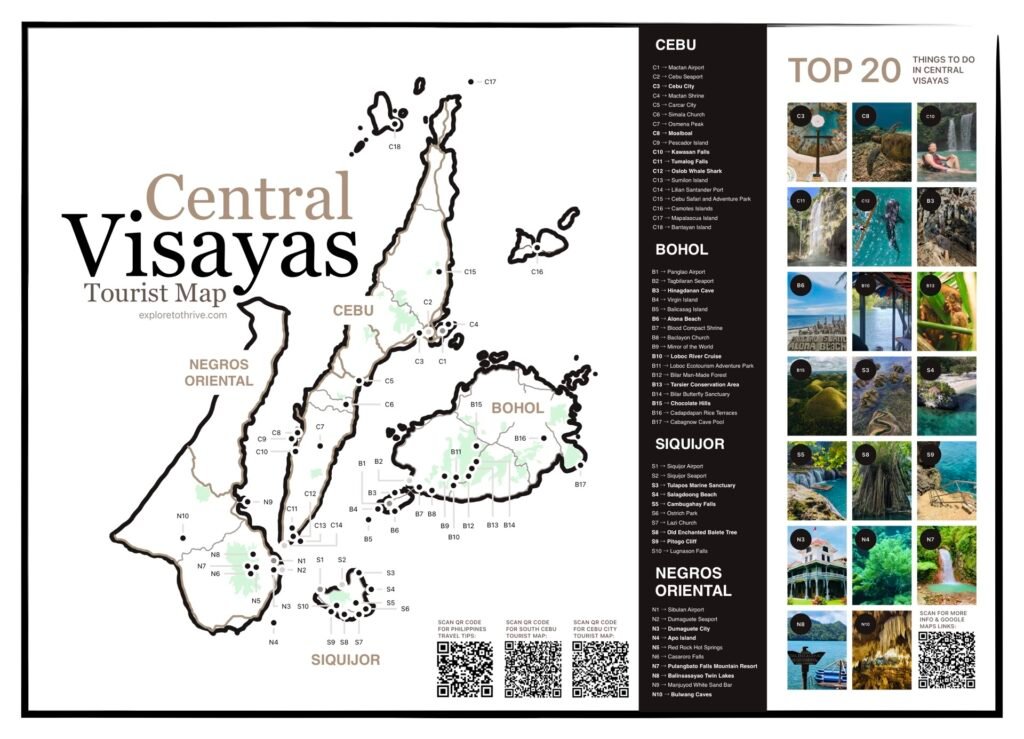
This tourist map gives you a great look at all the awesome things you can do in Central Visayas. Top popular spots and cool new places across Bohol, Cebu, Negros Oriental, and Siquijor are marked right on the map. Tap the map image or hit the button to grab your free printable PDF. Links to Google Maps are packed into the blog post.
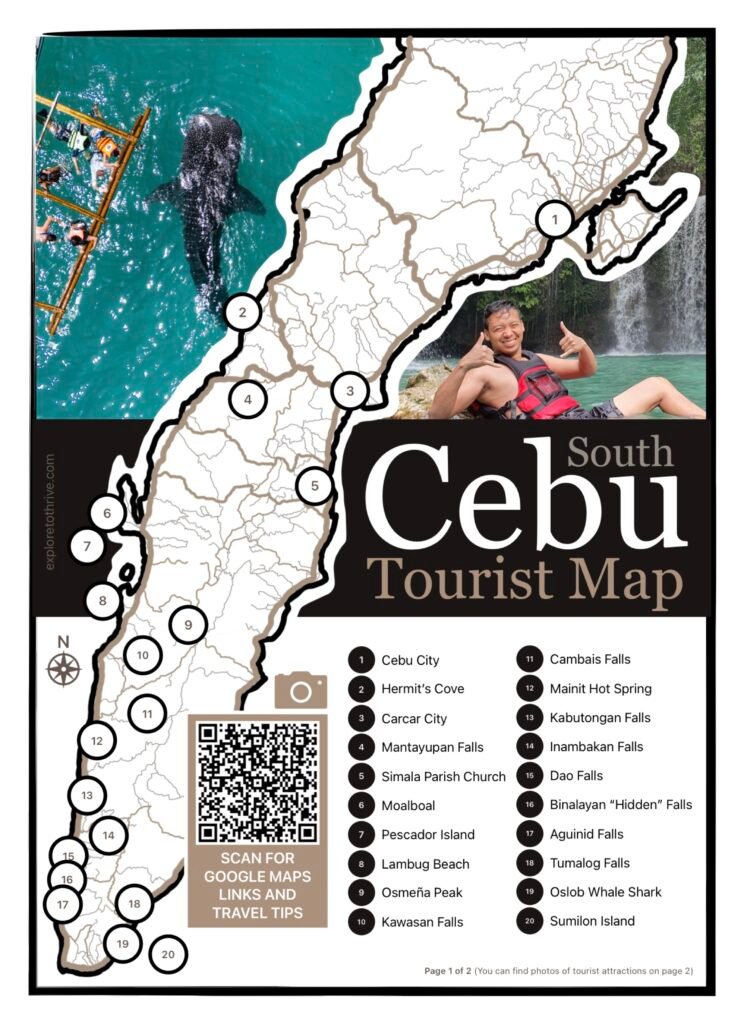
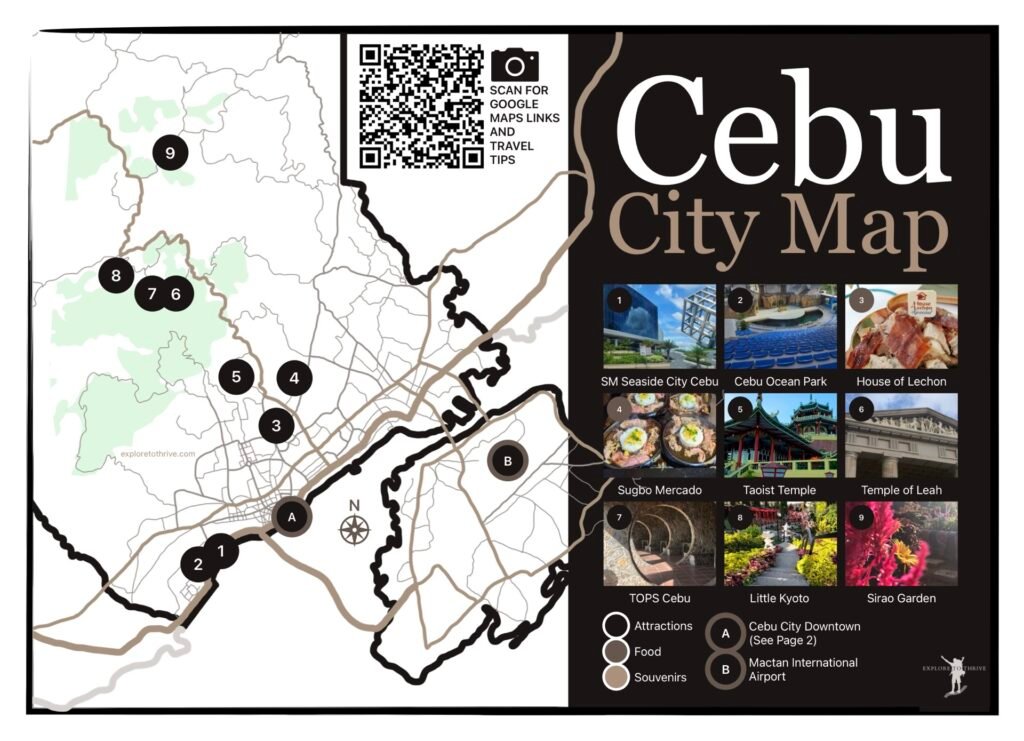
Give Cebu a closer look. There’s so much to discover! Check out my maps.
Thank you for reading
I hope my trip and experiences spark ideas for your travels and help you plan your next trip. But before you go, if you haven’t checked it out yet, drop by my homepage so I can give myself a proper introduction. Catch you there!
Support Explore to Thrive
If this post brought you value, please help me keep this blog growing by checking out the services I recommend below. They are affiliate links, meaning that if you purchase a ticket or book a service through them, I earn a small commission at no extra cost to you. Your support makes a real difference in helping me continue creating helpful content for you.