Must-See Historical Sights in Bohol: Blood Compact Shrine, Baclayon Church and More
Experience Bohol in a whole new way. Here are the historical attractions you should check out to explore the island and make the most of your trip.

Back in school, they pretty much made it sound like Manila and Cebu were the only places where historical events happened and where you could find historical sites.
So when we visited Bohol and stopped by a couple of heritage sites, our trip turned out to be an eye opener (on top of being memorable)!
If you are visiting Bohol, there are historical attractions I recommend you see.
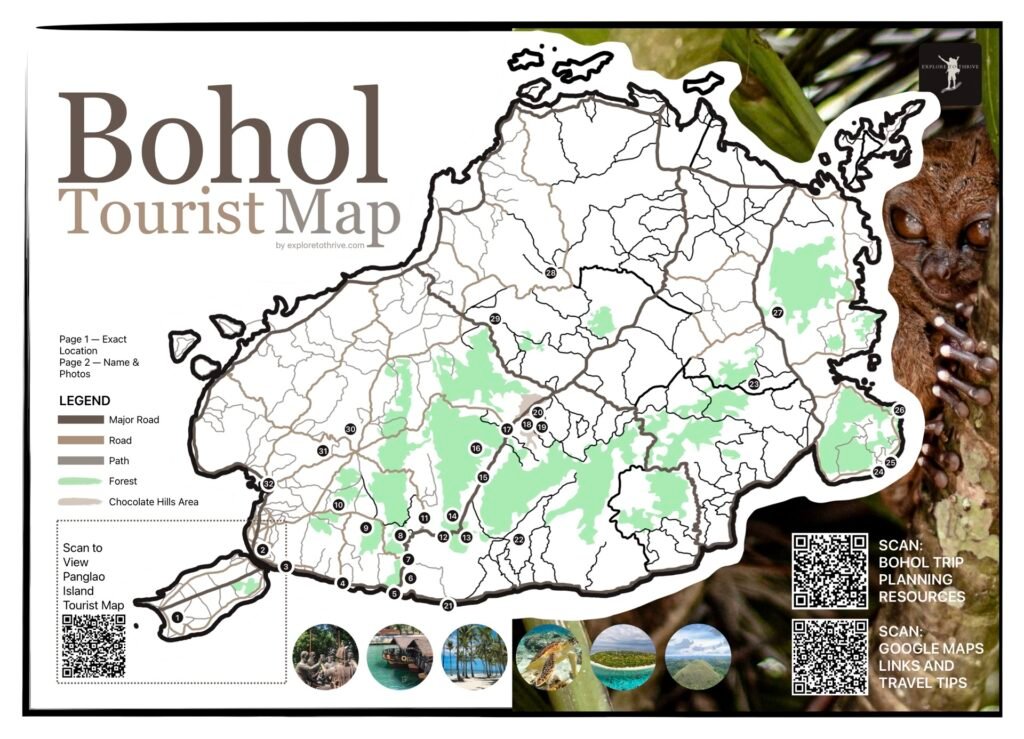
I visited some of them. Others, I discovered as I created my tourist map of Bohol and tourist map of Panglao. Check them out to put a twist in your trip, and steer away from the usual beach, Chocolate Hills, and tarsier experience everyone gets.
The Unmissable Historical Sites in Bohol
What’s nice about these historical attractions in Bohol is that they are very close to Tagbilaran City. So whether you’re from the city or coming from Panglao, reaching them won’t be a problem.
In fact during our day tour of Bohol, these two attractions were the first we visited before heading to the main highlights like the Chocolate Hills in Carmen, the Floating Restaurant in Loboc, and the Tarsiers at the Tarsier Conservation Area in Bilar. Not only are they minutes away from the city, they are also right along the way to the major inland spots in Bohol.
You can check out my one-day Bohol itinerary to see how our trip played out.

Hi! It’s Eljon and I want to welcome you to my blog, Explore to Thrive.
Here, I share my experiences with traveling, reflections on spirituality, personal growth and insights on building an online business, all to make a difference.
But my mission goes beyond that. You can learn more about what I do by visiting my homepage or by subscribing to my newsletter.

Blood Compact Shrine
Blood Compact Shrine was the very first stop on our itinerary.


And funny enough, when we arrived in the area, I thought we were at a souvenir strip. There were so many souvenir stands!
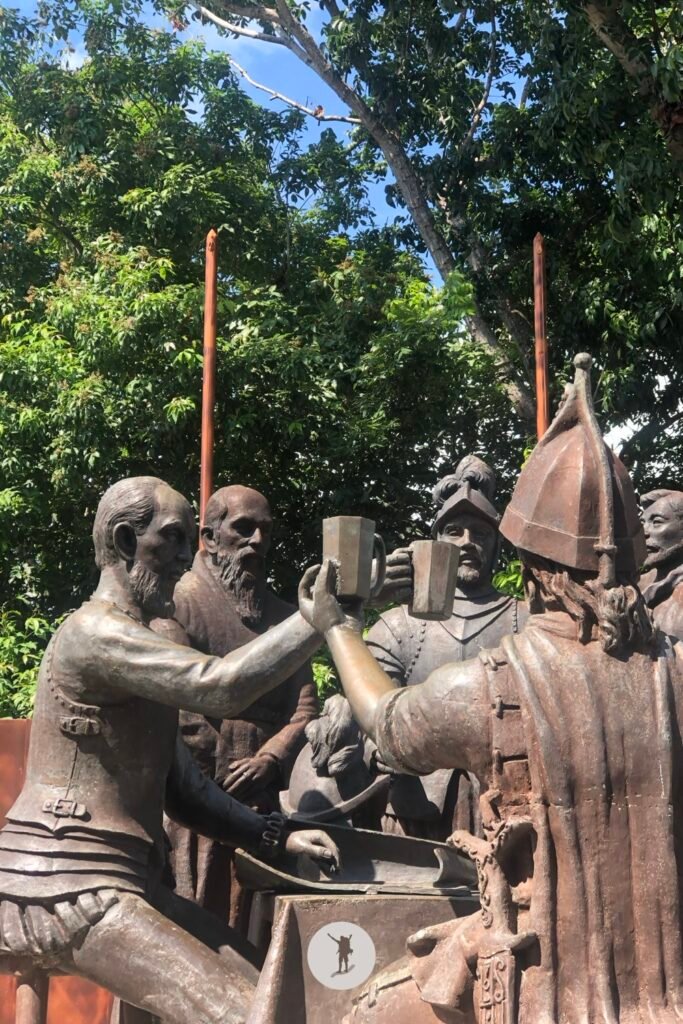
If it wasn’t for our guide, we wouldn’t have realized right away that we were visiting a shrine. As our guide led us out onto the terrace, we finally caught sight of it: Five life-sized bronze statues were gathered around a table with the sea right behind them.
In a nutshell, these statues bring to life the historic Sandugo, or blood compact, a sacred ritual that sealed a bond of friendship between Bohol’s native leaders and Spanish explorers back in 1565. Basically, it stands as the very first international treaty created by Filipinos, giving this spot incredible historical meaning.
The two central figures featured in the shrine are Datu Sikatuna, the local chieftain of Bohol, and Spanish explorer Miguel López de Legazpi. They made a small cut on their wrists, mixed a few drops of blood into cups of wine, and drank together to seal their pact.
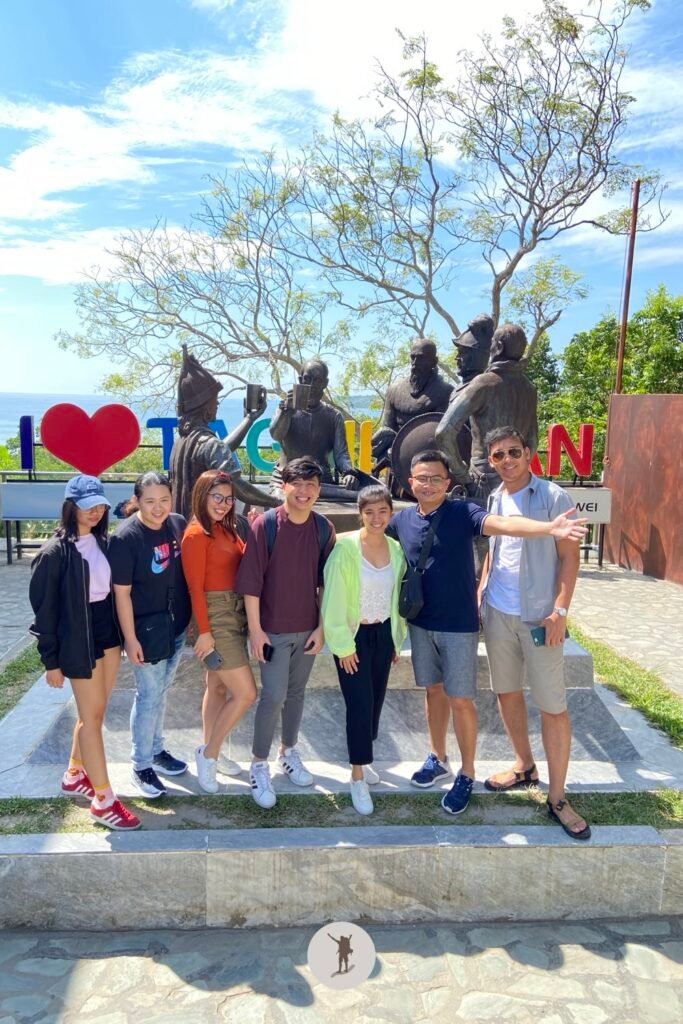
I admit that, at first glance, the shrine did not feel like anything special to me. But as our guide broke down the story behind it, everything slowly started to click.
When I last checked Google Maps for details about the Blood Compact Shrine, the sculpture was relocated to a new site. The new site is right next to the old one, just a short walk away, but set in a much bigger compound.
There is no longer a sea view right beside the sculpture. But it now features a mini outdoor amphitheater, a wishing well, and a scenic deck that gives you an amazing view of the whole compound and the sea.
Baclayon Church
It didn’t take us ten minutes to get to Baclayon Church after leaving the Blood Compact Shrine.
My first impression of the church? It looked pretty much like other colonial era churches across the country. But as we got closer, its unique charm really started to show. The church is built from raw coral stone, not regular cement.

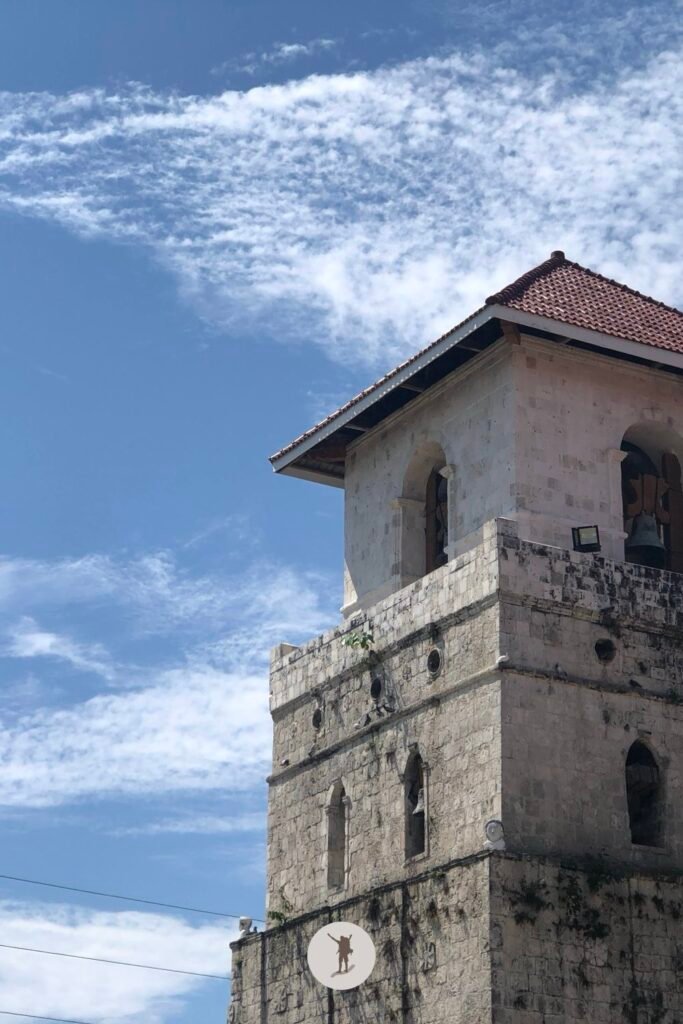
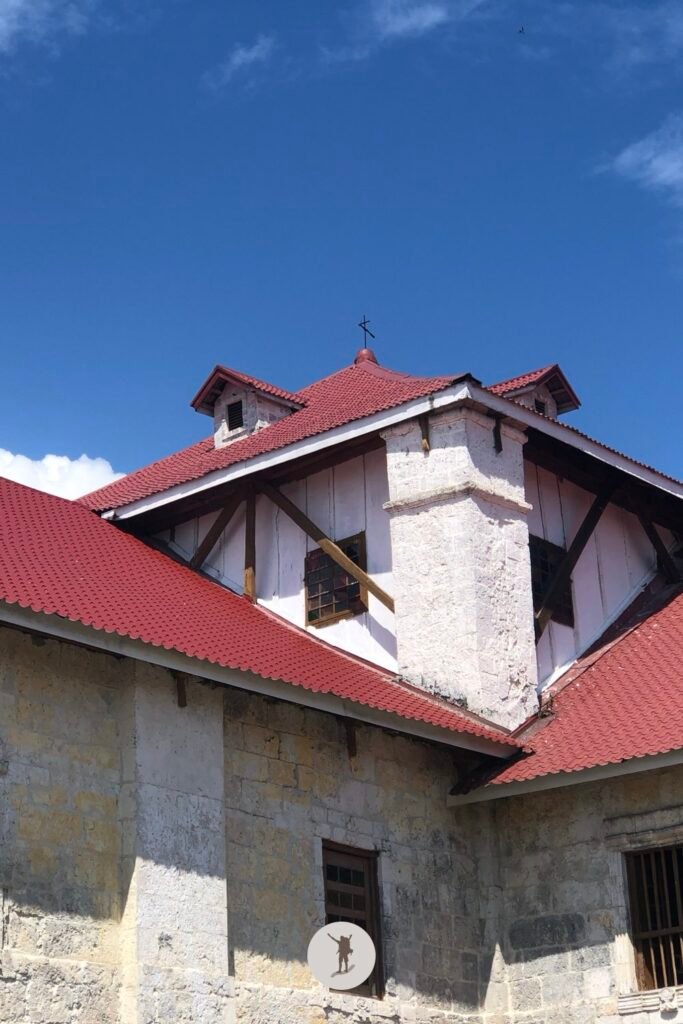
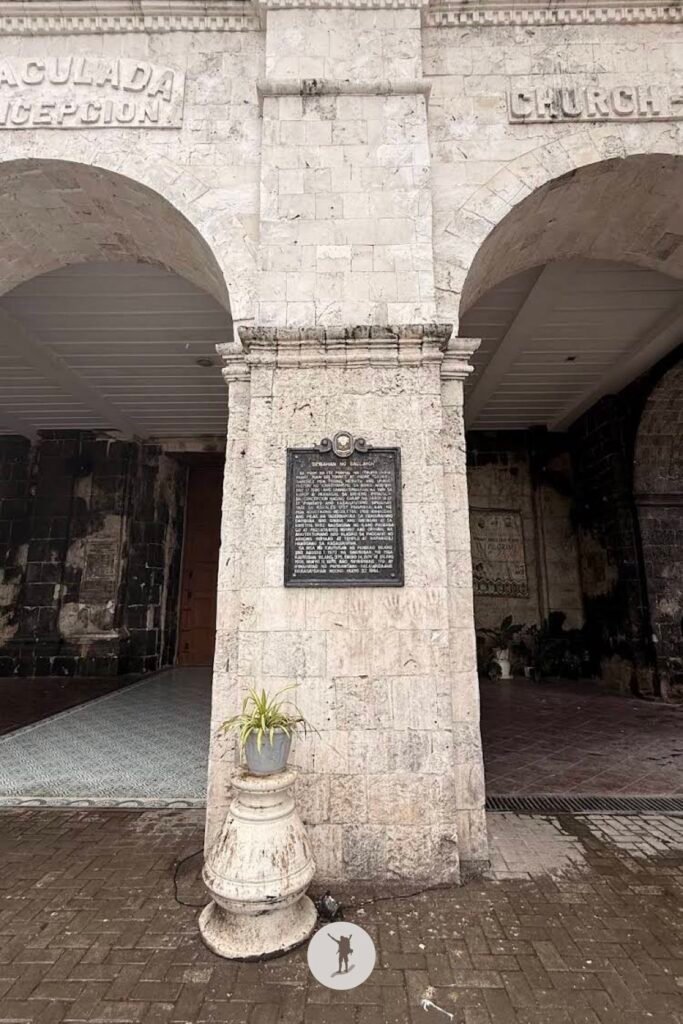
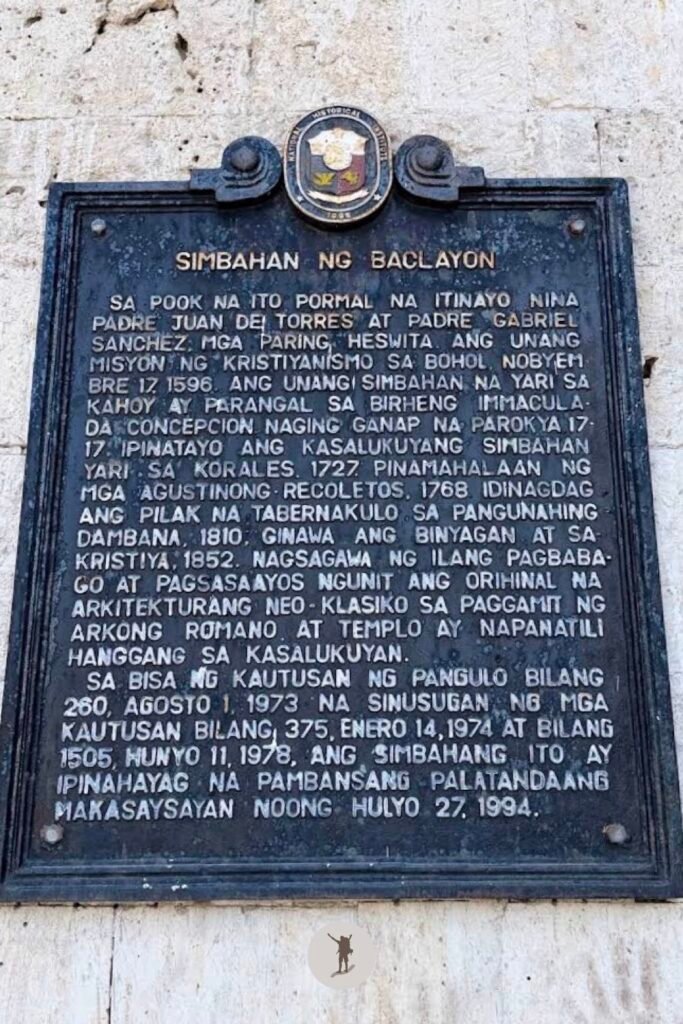
Actually, I did not know it was built from coral stone at that moment. Our guide only told us later.
Anyway, you can see this right away from the bell tower with its muted cream and off white color. However, not every section looked ancient. I noticed some parts appeared different because modern materials were added during the restoration following the 2013 earthquake.
What made the church specially interesting for me are the facts that our guide shared with us, starting with how the Spaniards built the church.
Believe it or not, they used coral stones! (Well, I just told you this) And do you know how they glued them together? Using egg whites!
That explains why the exterior shows a unique color. And that also explains why Spaniards took very long to build the church: over a century!
According to Wikipedia, Spaniards founded it in 1596 and only completed it in 1727. Imagine how many eggs were used. How many chickens had to lay eggs. Mind blowing.
As for the interiors… If you’ve seen the interiors of Lipa Cathedral in Batangas or Betis Church in Guagua, Pampanga, lower your expectations for Baclayon Church. The murals on the ceiling look pretty, but they aren’t quite as stunning as the ones in those other churches.
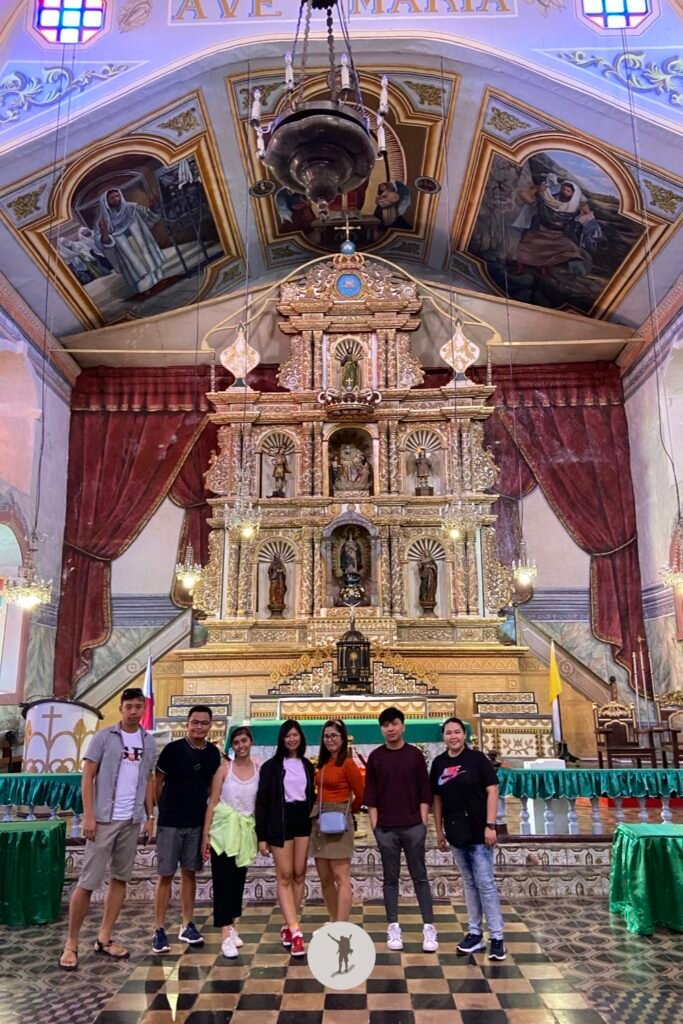
What impressed me instead were the colorful stained glass windows. They don’t feature detailed images like the ones in European churches. But they seem designed to flood the space with soft colored light, creating an ethereal atmosphere for prayer.
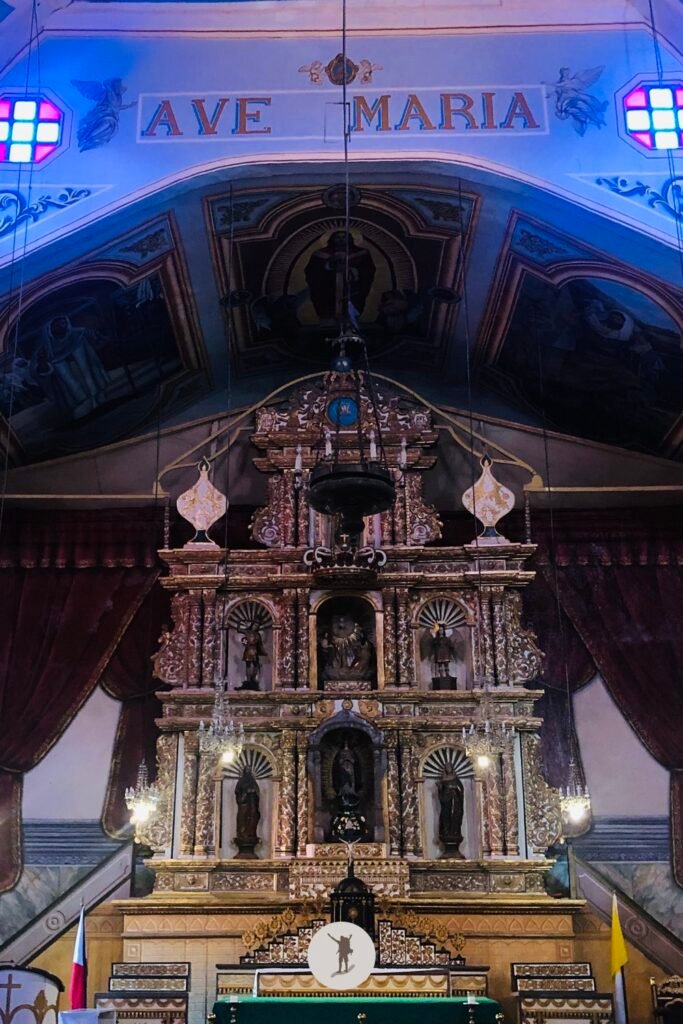
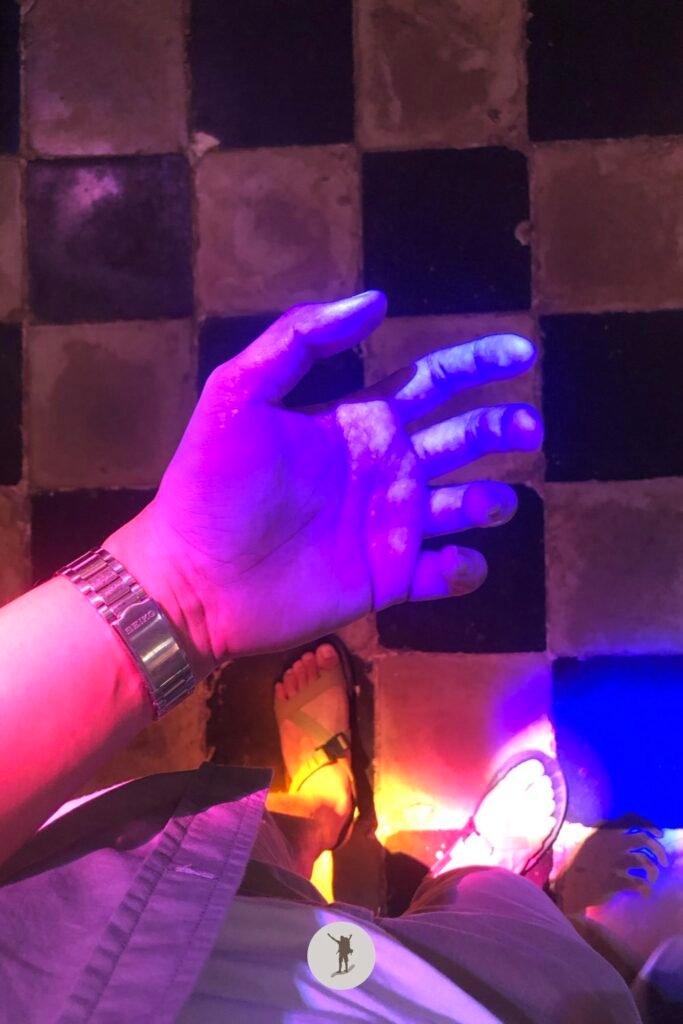
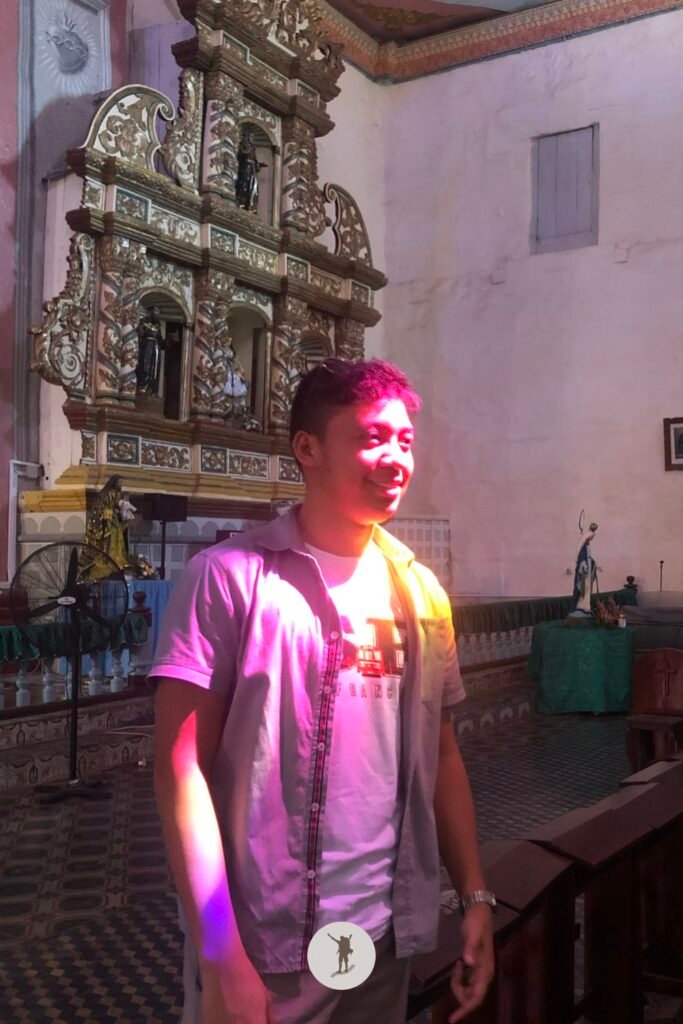
As a tourist with a defined itinerary, the interior of the church marked the end of our visit.
But if you have a more flexible schedule, you can check out the church’s museum. It’s called Museo Parroquial de Baclayon, and it’s where you can take a good look back at the past through the 16th to 19th-century religious relics kept in it.
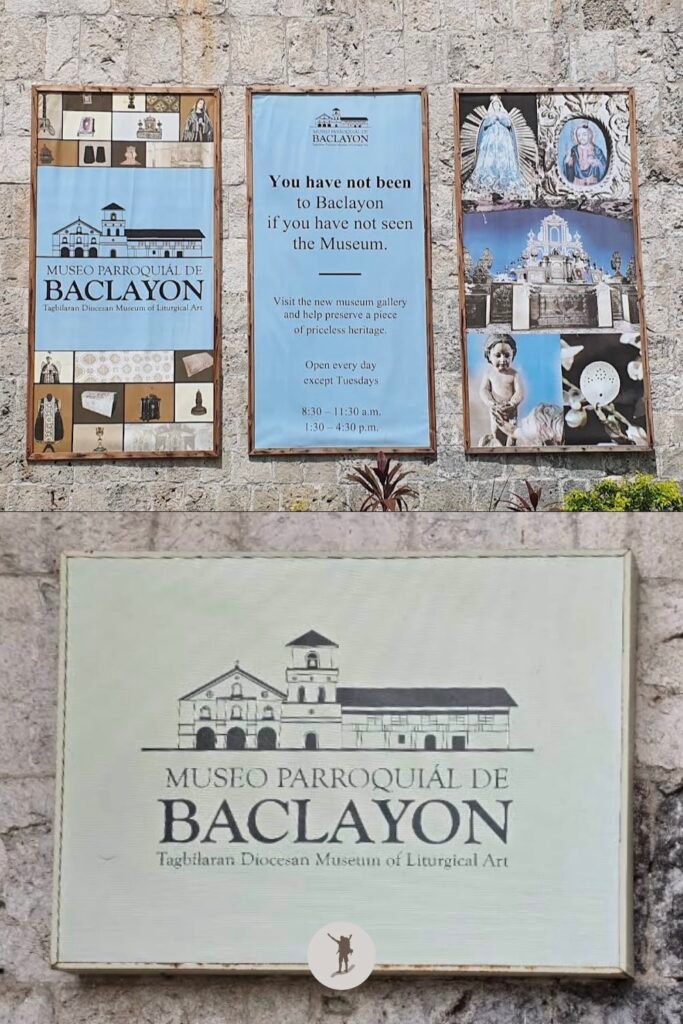
From reviews I found on Google Maps by people who actually visited the museum, some of the most interesting exhibits are the Cantorales or Choral Books. The crumbling pages of these giant parchment books written in Latin with Gregorian chants definitely look time transporting.
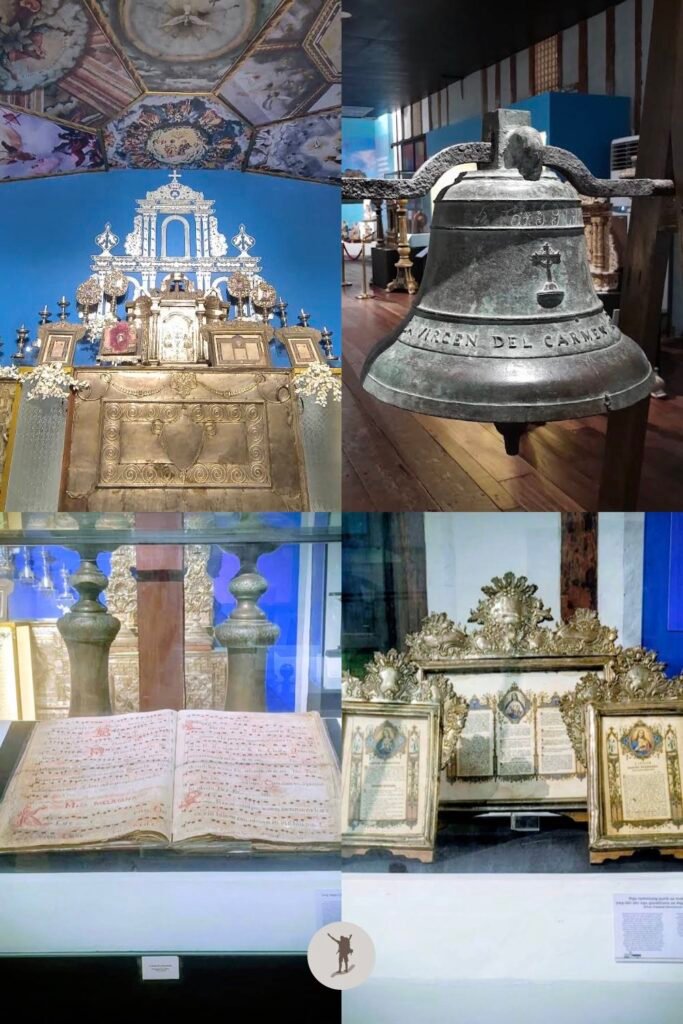
(Credits to the photo contributors on Google Maps)
From other tourists’ photos, the museum also houses Ivory and Wooden Santos (Saint Statues) and 16th–19th Century Vestments and Silverware. The museum is easy to find, right there on the second floor of the old convent.
Museo Parroquial de Baclayon does not have an official website. For the latest information, you can reach out through Baclayon’s official Facebook page or call the phone number listed on the page.
Organize Your Trip:
Other Historical Places to See in Bohol
The thing is, there are more historical places to see in Bohol aside from these two I shared. And truly, they offer a way to experience Bohol beyond its marine life, beaches, Chocolate Hills, and tarsiers.
Honestly, if bad weather hits your trip and prevents you from enjoying the outdoors, these historical attractions can save your day.
National Museum Bohol
One of the most interesting discoveries I made while I created my map of Bohol was the National Museum. I had no idea that our country had more than one national museum!
Yes, there is a national museum in Bohol, and while it is not as large as the one in Manila, it is well worth a visit to discover interesting artifacts and local history.
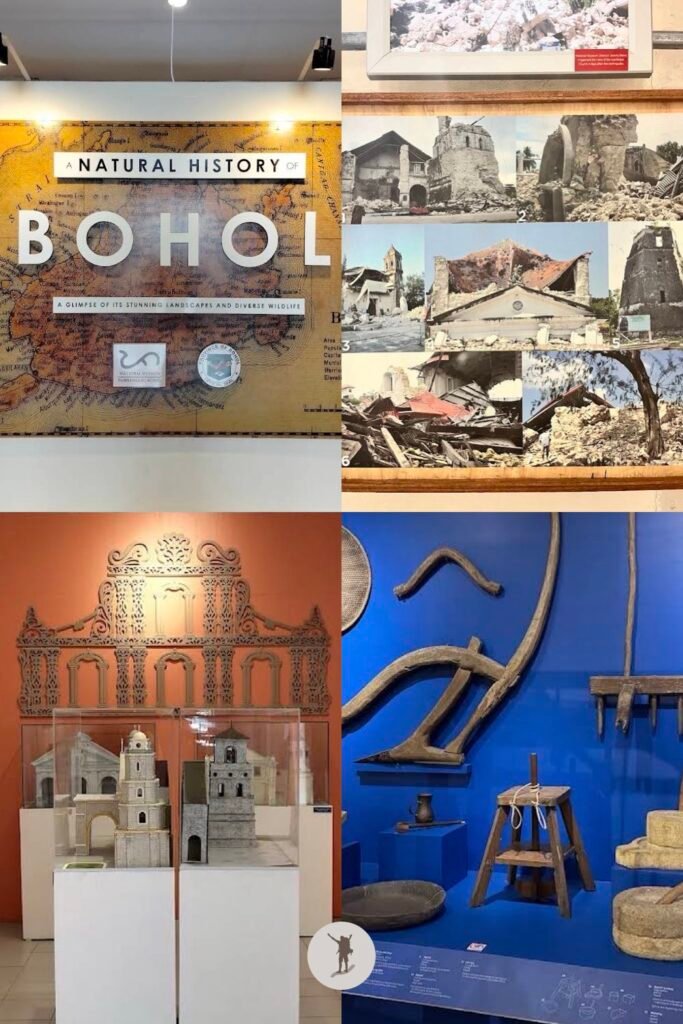
(Credits to the photo contributors on Google Maps)
For example, the Pagbanhaw Gallery highlights the resilience of Boholanos after the devastating 2013 earthquake. The gallery details the restoration of heritage sites like Baclayon Church that were destroyed in the disaster.
Visitors can also learn about the geological and natural history of Bohol. Like, if you want to know the origin of the Chocolate Hills, this is the place to be.
The best part? Entrance is free, and it is located right in the heart of the city, across from St. Joseph the Worker Cathedral Shrine, which also features stunning interiors.
For the latest news and more information, the official Facebook page of the National Museum of the Philippines Bohol is the best place to go. They have a website, but it had server issues the last time I checked.
Museo Ng Pamana At Kasaysayang Boholano
If you are staying in Loboc or nearby during your trip to Bohol, you do not have to travel to Tagbilaran City to discover the local heritage. In Loay, you can find Museo ng Pamana at Kasaysayang Boholano, or Pamana for short, a hidden gold mine of local culture and history.
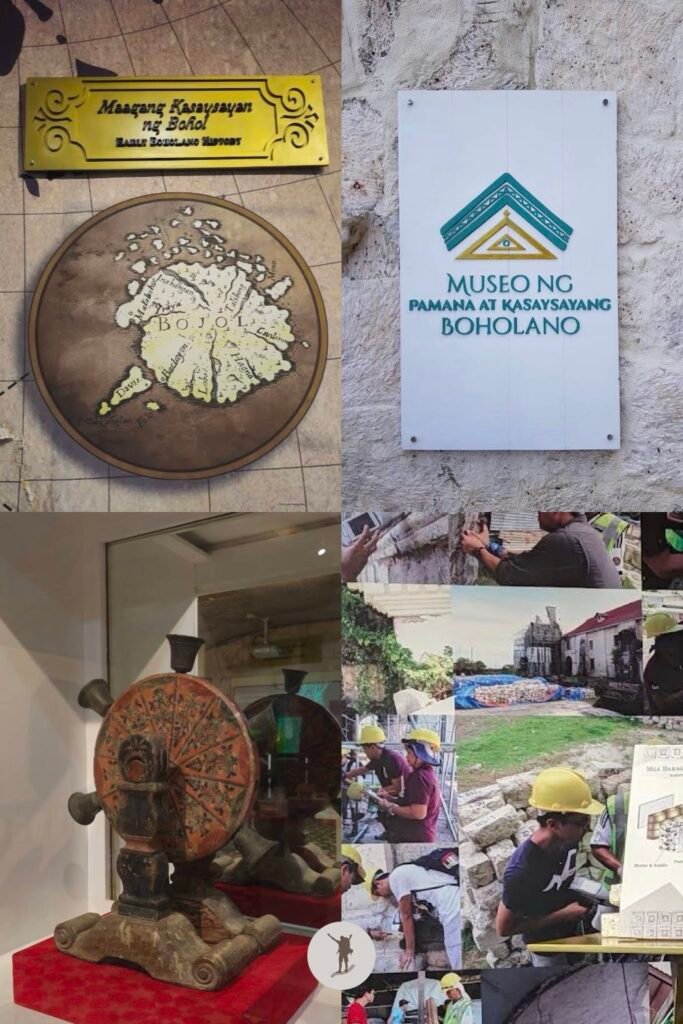
(Credits to the photo contributors on Google Maps)
According to panaynews.net, the museum is the place to be if you want to see the sacrifices, struggles, and triumphs of Boholano ancestors across centuries. It features two key highlights.
First, inside the Casa Tribunal Building, the exhibit highlights the history of Bohol’s iconic colonial churches damaged during the devastating 7.2 magnitude earthquake on October 15, 2013. Here, you can learn about the meticulous technical, architectural, and community preservation efforts led by the NHCP to rebuild and restore these heritage structures.
The second highlight is inside the Escuela Niños Building. Inside, visitors can learn a lot about the colonial and wartime history as well as the liberation era of Bohol. Exhibits dating back to the Spanish colonial era, the American period, and the Japanese occupation await you in this building.
This museum does not have an official website, so for practical information, their official Facebook page is the place to go.
Other Historical Churches in Bohol
Apart from Baclayon Church, Bohol has several other historic churches. And if you are an off the beaten path traveler, they might be the hidden gems you are looking for.
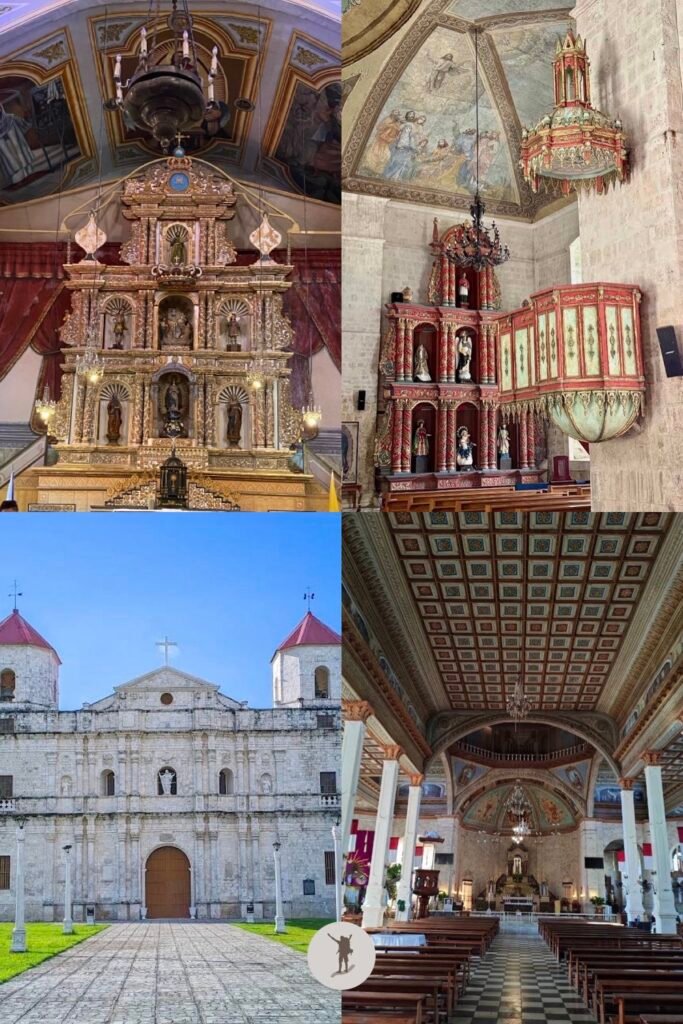
(Credits to the photo contributors on Google Maps, top-left to lower-right: Baclayon Church, Loboc Church, Loon Church, Dauis Church)
For example, the church in Loboc, also known as the Diocesan Shrine of Our Lady of Guadalupe de Extremadura. Historically, it served as the inland headquarters (residentia) for missionaries escaping coastal pirate raids.
What caught my eye were the murals on its ceiling that show Christian stories and the intricate red Baroque altars that are true works of art.
If you plan to visit Museo Ng Pamana At Kasaysayang Boholano or National Museum Bohol and see the exhibits on how Boholanos rebuilt their churches, you must visit Loon Church as well.
It’s one of the churches Boholanos completely rebuilt from the ground after the 2013 earthquake crushed it to rubble. Perhaps it will be interesting to see its before and after look in person.
Anyhow, Loon Church, or Our Lady of Light Church, looks far from ancient after restoration. From pictures, it looks gorgeously neoclassical.
For me, the most interesting part of modern Loon Church is the ceiling paintings about the history of the church.
In case you’re based in Panglao during your Bohol trip, you don’t have to go far into mainland Bohol to see a stunning church. Dauis, the town on the eastern side of Panglao Island, has its own church that catches your eyes, especially when you go inside and look up.
Interestingly, local tradition holds that this church has a miraculous well that sustained townspeople during historical pirate raids when water sources were cut off.
For Your Bohol Trip Preparation
Writing this post makes me realize how much you need more than a couple of days to explore Bohol.
On top of the relaxing experiences, adventures, and main highlights that already take 3 days, exploring heritage sites and museums easily takes another full day.
In fact, if you visit all the attractions on my Bohol tourist map and Panglao tourist map, a week easily fills up for your trip.
Getting around
Should you go exploring Bohol’s heritage sites, though, having a private vehicle makes getting around much easier.
Getting from Tagbilaran to different parts of Bohol is easy, but traveling from one small town to another, like Loon to Loboc, gets challenging using public transportation. Especially if you travel in a group, having a private car makes a big difference.
Where to stay
When I return to Bohol to check out these heritage sites, I’d stay either in Panglao or Loboc.
For one, both are close to the heritage sites I mentioned. But more importantly, beaches, snorkeling spots, river cruises, tarsiers, and the Chocolate Hills are accessible from them. Check out my other page for details and top hotel recommendations across budget, mid-range, and luxury options in these areas.
Extend your trip
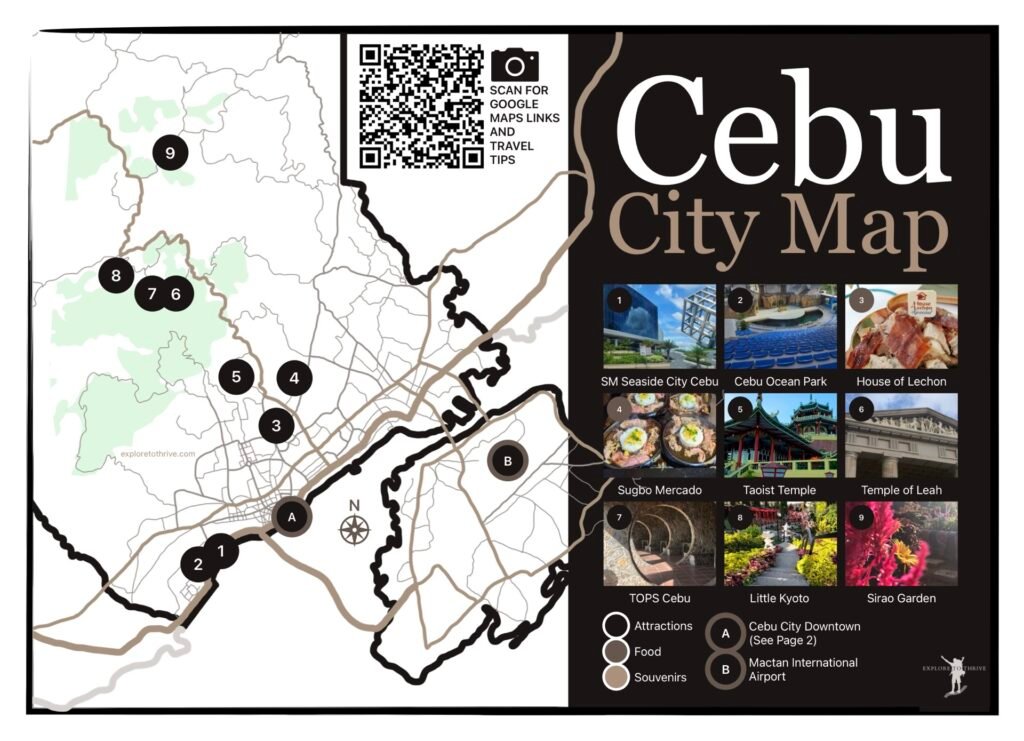
If more heritage sites and rich cultural experiences are what you’re looking for, exploring the neighboring island of Cebu might be next for you. Cebu City is the oldest city in the Philippines, with lots to discover.
Check out my Cebu City map for an overview of experiences and attractions waiting for you there. Alternatively, use my one-day Cebu City itinerary for quick travel inspiration.

Planning a Trip to Bohol?
Bohol is one of the highlights of the Philippines. Don’t miss out on what makes this island so special. Here’s our itinerary to spark some inspiration.
If it’s your first time visiting Bohol, you’ll definitely find everything we discovered and learned on our trip helpful. Learn what to avoid, what not to miss, when to visit, how long to stay, and so much more. Read all my tips so you can have a truly wonderful time in Bohol. Hit the button below.
View my maps for a visual guide to discovering attractions.
Whether it’s your first time or your hundredth time visiting Bohol, my map of Bohol will help you plan your trip. It shows exactly where the top spots, hidden gems, and essential services are located so you can create a custom itinerary that fits your travel style.
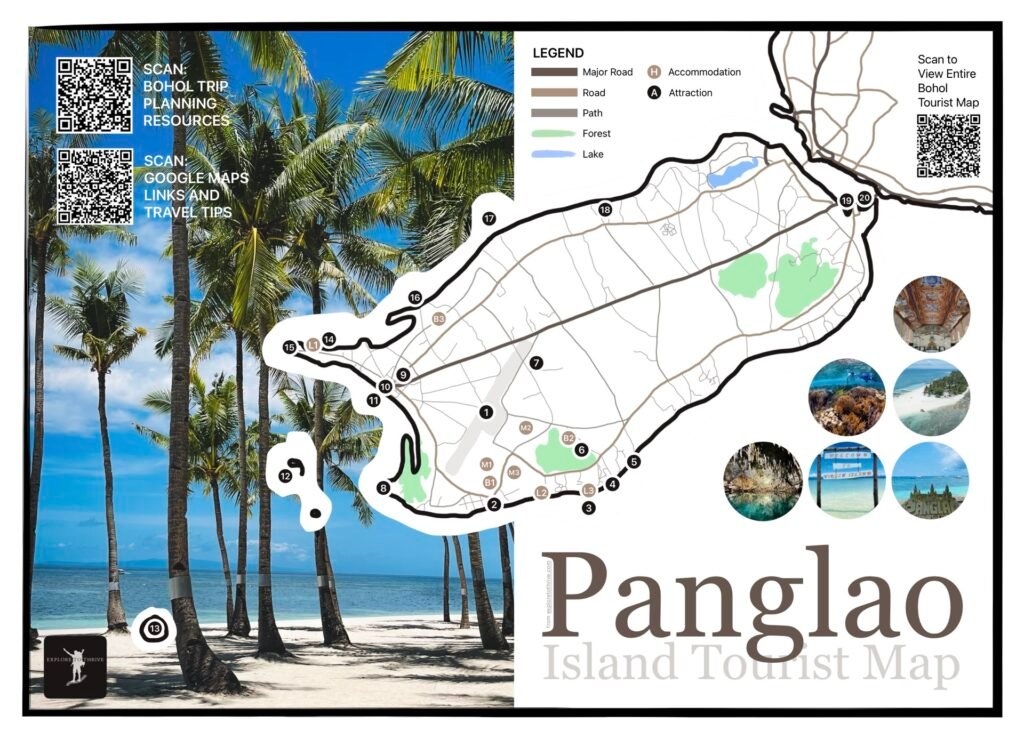
Bohol Island has a smaller neighboring island called Panglao Island. This is where you’ll find the main airport for Bohol, but there’s so much more to it! Some of the most stunning beaches, spectacular caves, and breathtaking marine sanctuaries in the country are here.
Important: Organizing your trip, like booking tours, ferry tickets, places to stay, or vehicle rentals, shouldn’t feel overwhelming. That’s why I created my Bohol Travel Planning Page to help you prepare for your upcoming adventure. It serves as your complete guide to remove the stress so you can focus on getting excited.
Hit the button below to start planning.
Explore Central Visayas
There’s more to see in Central Visayas.
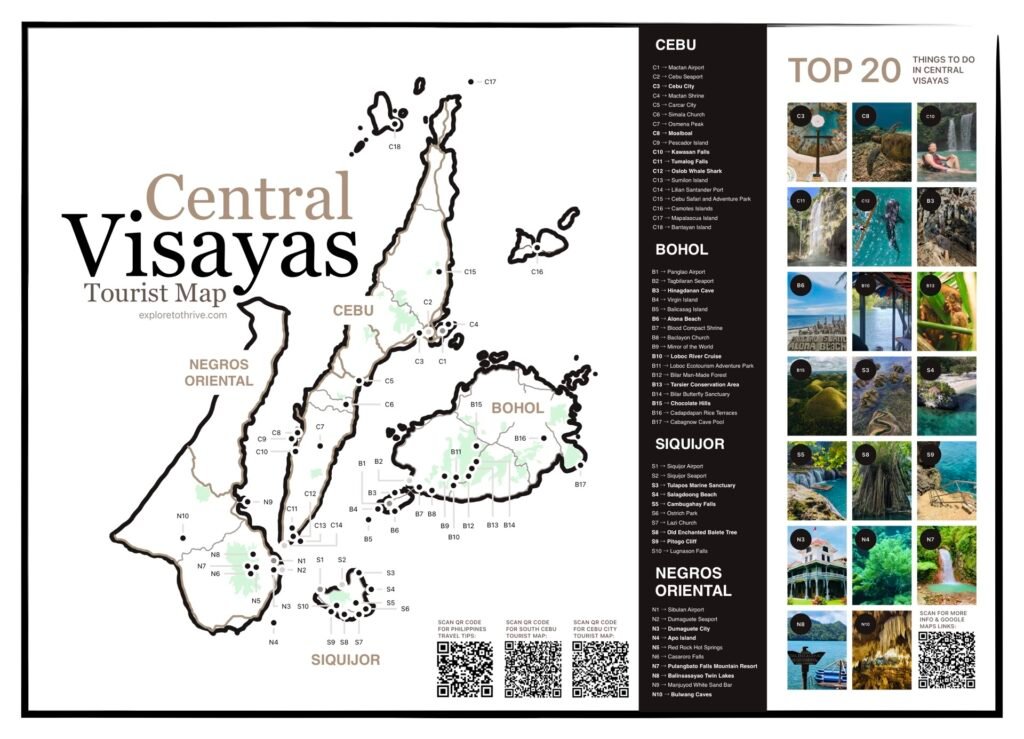
This tourist map gives you a great look at all the awesome things you can do in Central Visayas. Top popular spots and cool new places across Bohol, Cebu, Negros Oriental, and Siquijor are marked right on the map. Tap the map image or hit the button to grab your free printable PDF. Links to Google Maps are packed into the blog post.
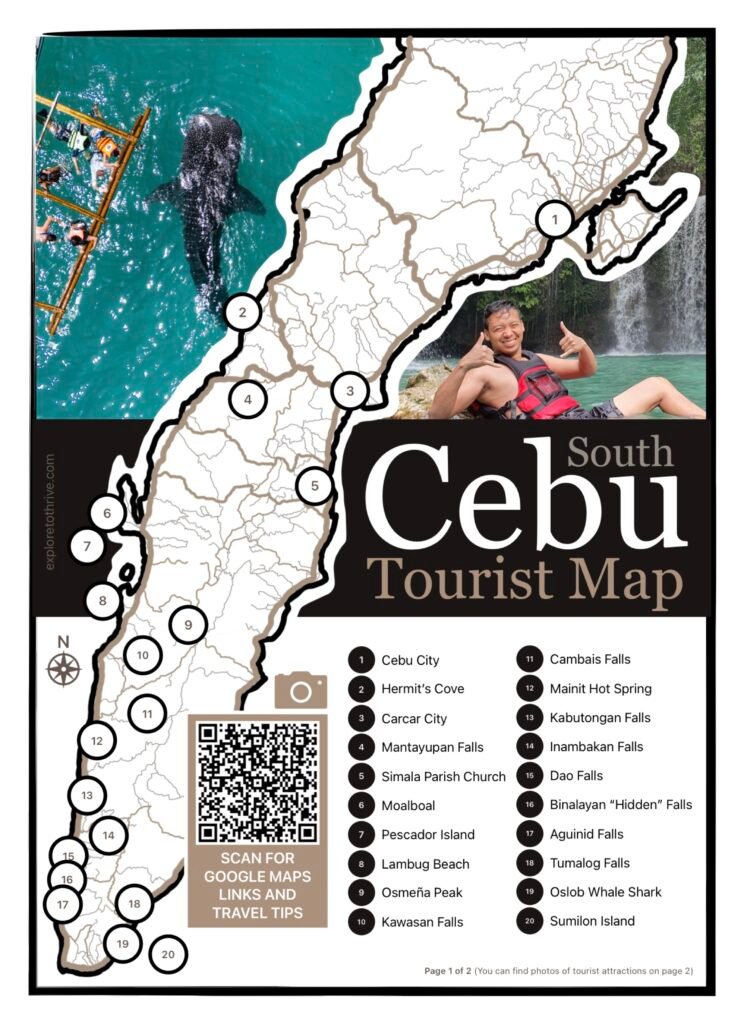
Give Cebu a closer look. There’s so much to discover! Check out my maps.
Thank you for reading
I hope my trip and experiences spark ideas for your travels and help you plan your next trip. But before you go, if you haven’t checked it out yet, drop by my homepage so I can give myself a proper introduction. Catch you there!
Support Explore to Thrive
If this post brought you value, please help me keep this blog growing by checking out the services I recommend below. They are affiliate links, meaning that if you purchase a ticket or book a service through them, I earn a small commission at no extra cost to you. Your support makes a real difference in helping me continue creating helpful content for you.